

This manufacturer's guide compares W-beam and Thrie-beam guardrail profiles and their applications, using a 310 mm W-beam and a 506 mm Thrie-beam as examples. It covers steel strip selection, corrosion protection, inline punching and tooling changes on lines that produce both profiles.
W-beam and Thrie-beam are two common profiles for corrugated steel highway guardrails. The W-beam takes its name from its W-shaped cross section. The Thrie-beam has a third corrugation and generally a wider face. Both are continuously roll formed from steel strip, each with its own set of forming rolls. Plants that supply both profiles need to plan for roll changes and check that the feeder, punch and shear can handle both specifications.
W-Beam and Thrie-Beam Profiles
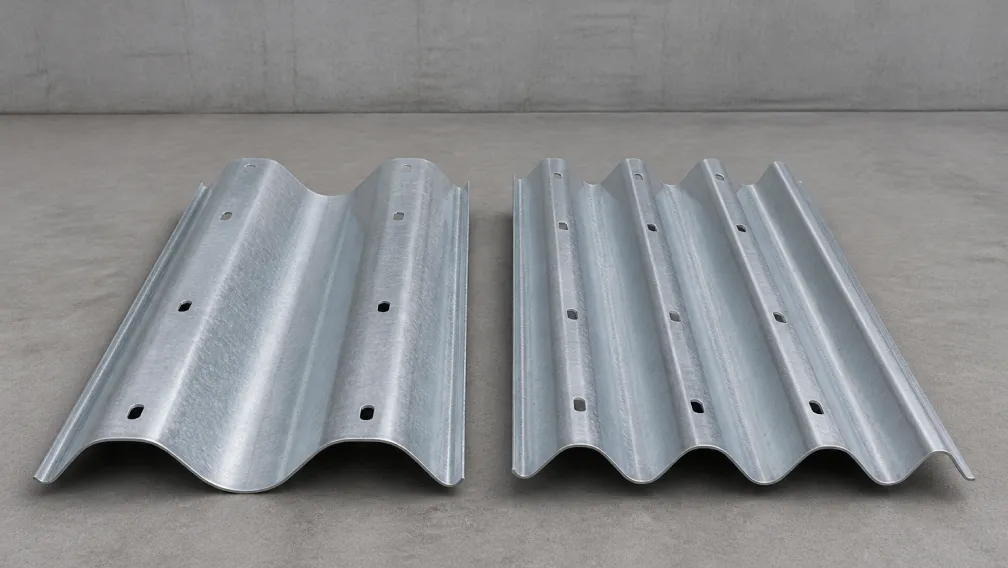
The corrugated steel panels form the longitudinal rail of a highway guardrail system. They overlap along the road, supported by guardrail posts and connecting hardware. Each panel has a uniform profile along its length, with holes for splicing and mounting. At each overlap, the crests and valleys of adjacent panels nest together. Splice bolts pass through the end holes in both panels to join them into a continuous rail.
W-Beam Guardrail
The W-beam has two main corrugations that give it its characteristic W shape. It is widely used for roadside protection. A Two-Wave Guardrail Roll Forming Machine forms both corrugations continuously from a single strip of steel. The finished panel has two types of bolt holes. Splice bolt holes at the ends connect adjacent panels, and post bolt holes secure the rail to its supports.
Thrie-Beam Guardrail
The third corrugation generally makes a Thrie-beam panel wider. Typical applications include bridge approaches, barrier transitions and other road sections where the project specifies this profile. Production follows the same continuous forming process as for W-beam, but a Three-Wave Guardrail Roll Forming Machine uses rolls shaped for the three-corrugation section.
How the Two Guardrail Profiles Compare
The two profiles differ in geometry, tooling and typical use.
| Feature | W-beam guardrail | Thrie-beam guardrail |
|---|---|---|
| Cross section | Two main corrugations in a W shape | Three main corrugations |
| Panel width | Typically narrower | Typically wider |
| Roll tooling | Rolls shaped for the W-beam section | Rolls shaped for the Thrie-beam section |
| Typical applications | Highway roadside protection | Bridge approaches, barrier transitions and higher-risk sections with greater containment requirements |
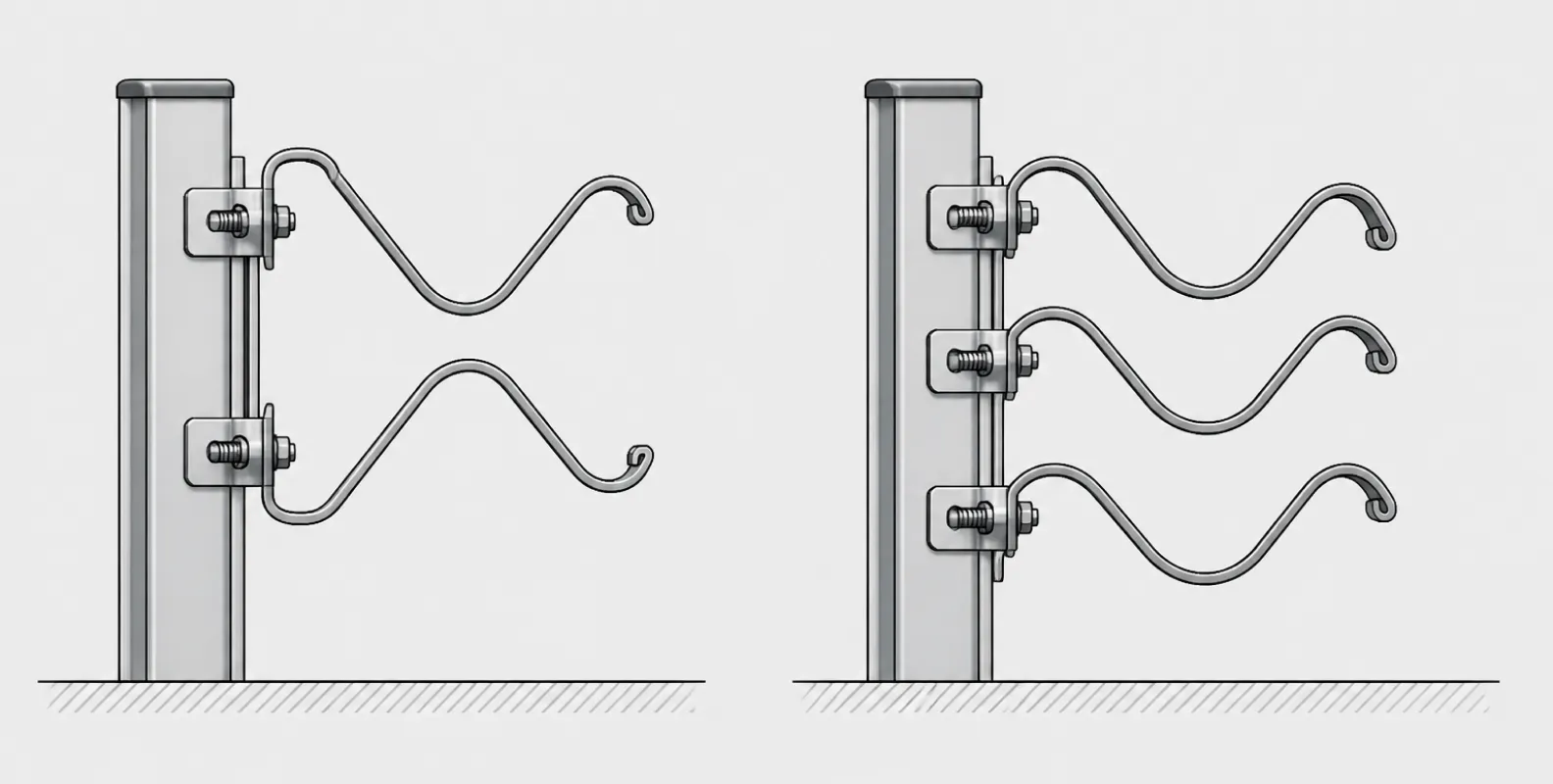
The corrugation count identifies the panel profile. The containment rating applies to the complete guardrail system, including the panels, posts, connecting hardware and end treatments. Select the profile for each road section according to the specified containment level and system design. When retrofitting an existing guardrail, check that the mounting holes in the new panels line up with the existing posts and connections.
For the manufacturer, the wider Thrie-beam section changes both the flat strip width required and the shape of the forming rolls. Whether a single line can produce both profiles depends on the roll sets and the configuration of the punching, shearing and discharge equipment. Even on a shared line, the forming section requires a tooling changeover between profiles.
Common Guardrail Dimensions and Thicknesses
Guardrail panel specifications generally give the overall length, finished profile width, corrugation depth and steel thickness. The following are examples of common commercial sizes.
| Profile | Overall length | Finished profile width | Corrugation depth | Common thicknesses |
|---|---|---|---|---|
| W-beam | 4,320 mm | 310 mm | 85 mm | 3 mm or 4 mm |
| Thrie-beam | 4,320 mm | 506 mm | 85 mm | 3 mm or 4 mm |
A given profile can come in several widths. W-beam panels, for example, are also available in widths of 306 mm and 312 mm. Refer to the cross-section drawing for the specified width and corrugation depth, and to the hole layout for splice and post bolt hole locations.
Finished width is the straight-line distance between the two edges of the formed panel. The flat strip must be wider because it includes the steel that forms the crests and valleys. Use the flat strip width to size the decoiler, leveler and feeder. To calculate how many panels an order requires, use the effective installed length of each panel. Its overall length includes the overlap with the next panel.
Thickness affects both steel consumption and equipment loads. For the same flat strip width and length, a thicker panel uses more steel. The roll former's shafts, stands and drive must be sized for the forming loads. A change in steel grade can also change the forming load and springback, so specify the thickness range together with the steel grade.
Steel Strip and Corrosion Protection
The project drawings and applicable standards determine the steel grade and base metal thickness. A guardrail production line can be configured for grades such as Q235, Q355, S355MC or Q700HL. Successive forming passes bend the strip into corrugations. As the strip leaves the rolls, it recovers slightly toward its original shape. This elastic recovery is called springback. Roll designers account for springback at the specified steel grade and thickness when selecting roll contours and planning the forming passes, so the finished section meets the drawing dimensions.
Guardrail panels can be hot-dip galvanized or finished with a project-specified composite coating. For galvanizing after fabrication, the line punches the flat strip, forms the profile and cuts each panel to length. The whole panel is then dipped. The zinc coating then covers the walls of the holes and the cut ends. If the project permits pregalvanized strip, punching and shearing expose bare steel. Protect the exposed hole edges and cut ends as specified by the project.
The coating process also affects the plant layout. If panels will be hot-dip galvanized after forming, leave room at the discharge end of the line to stack and transfer them. When using pregalvanized strip, check the contact surfaces on the forming rolls, conveyor rollers and stacker to avoid scratching the coating. For a layout showing the decoiler, punching station, roll former and stacker, see our highway guardrail production solution.
How W-Beam and Thrie-Beam Guardrail Panels Are Made
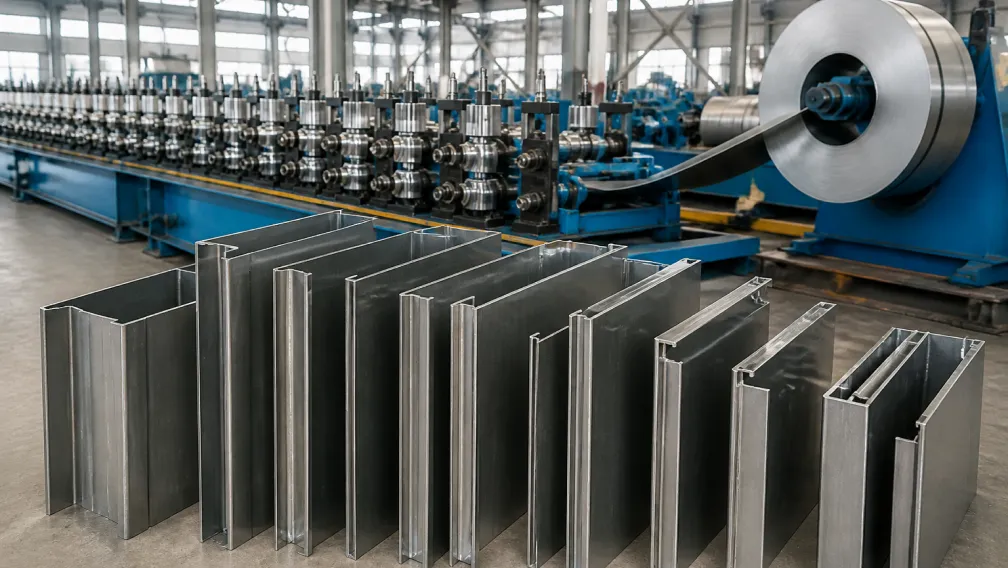
Both profiles are cold roll formed. On a post-cut line, a servo feeder positions the decoiled and leveled strip so the splice and post bolt holes can be punched while the strip is flat. Successive sets of forming rolls then bend the strip into the W-beam or Thrie-beam profile at room temperature. A shear cuts the formed rail to length, and a conveyor carries each panel to a receiving rack or automatic stacker. On a pre-cut line, the strip is cut into blanks of the required length before it enters the roll former.
Punching accuracy determines how well the splice holes line up when two panels overlap. The feeder sets the hole positions along the strip. The shear must cut in the correct position relative to the holes to achieve both the overall panel length and the specified distance from the hole center to the panel end. Each roll stand bends the strip a little closer to its final profile. The bend at each pass accounts for the material's springback. The profile, steel grade, thickness and hole pattern determine the configuration of a Highway Guardrail Roll Forming Machine. Punching and shearing cycle times also affect actual output.
A plant that produces one profile over the long term can choose a dedicated two-wave or three-wave guardrail roll forming machine. To supply both profiles on one line, specify two sets of forming rolls that share the same stands, drive, punching equipment and stacker. At changeover, install the roll set for the new profile, then check the corrugations and hole positions on the first panel against its drawing.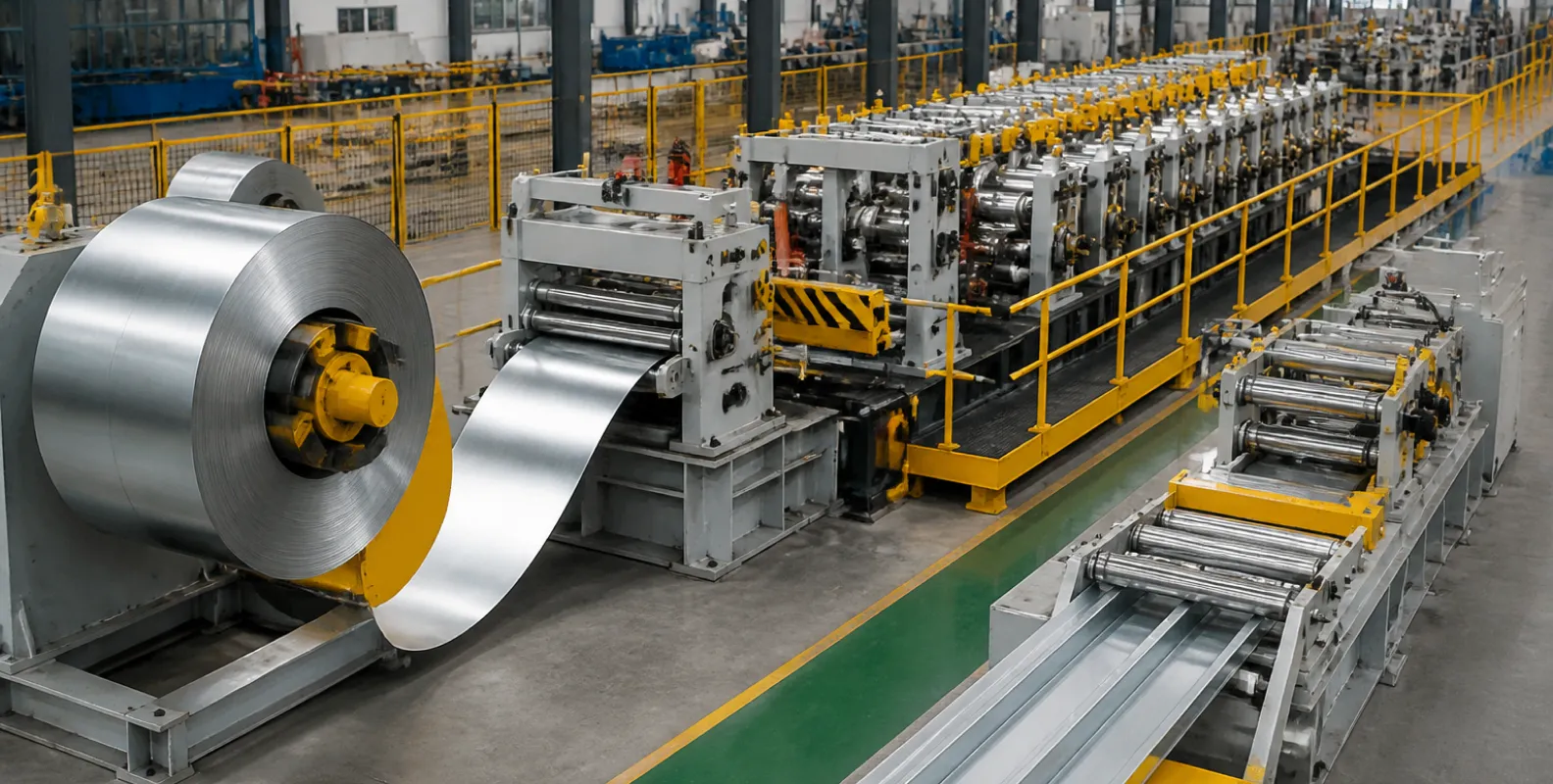
A complete highway guardrail production line can include a coil car, automatic conveying and stacking equipment. For continuous operation from decoiling through stacking, see the process layout for our automatic roll forming machine. Allow space for downstream corrosion protection and panel storage.
Production checks cover profile dimensions, hole spacing, hole-to-end distance, overall panel length and fit at the overlap. A trial with the strip specified for the order lets the manufacturer check forming, punching and cutting together. On a line that produces both profiles, inspect the first panel after each changeover.
Get a Guardrail Line Proposal for Your Panel Specifications
To plan a new guardrail line or upgrade an existing one, send us your panel drawings, steel grades, thickness range, applicable standards and target output. THRONCH engineers will recommend roll sets, punching equipment, a changeover method and a line layout. Standard configurations ship in 30 to 45 days. For custom lines, we confirm the lead time once the configuration is final. Before shipment, we test each complete line with the steel strip specified for the order. Contact us at amy@thronch.com.
-

THRONCH
Cold Roll Forming Machine Manufacturer
THRONCH is a direct manufacturer specializing in custom cold roll forming lines and welded pipe mills. With over a decade of engineering expertise, we share technical insights and deliver high-precision