Automatic lines suit high-volume production of equal-section metal profiles from coil. Roofing sheets, floor decking, brackets, planks and solar mounting profiles all run on the same flow: coil in, finished product out. Tell us your product mix and target output, and we will configure the line around it.
PV mounting structures consume rails and posts in large, repeated volumes. An automatic line with recipe control keeps long runs consistent, and the auto stacker removes manual packing at the end.
Roofing and wall sheets are equal-section profiles produced straight from coil. Continuous forming at twenty to thirty-five meters per minute covers the volume that building projects demand.
Floor decking profiles carry concrete slabs in multi-story steel buildings. Gearbox transmission keeps the deep ribs formed accurately across the full length of every sheet.
Seismic bracing and tunnel support brackets use small sections in high quantities. Servo punching puts the connection holes in place before forming, so parts arrive ready to install.
Steel planks for scaffolding and walkways need anti-slip patterns and consistent width. Punching, forming and cutting complete in one pass, ready for bundling.

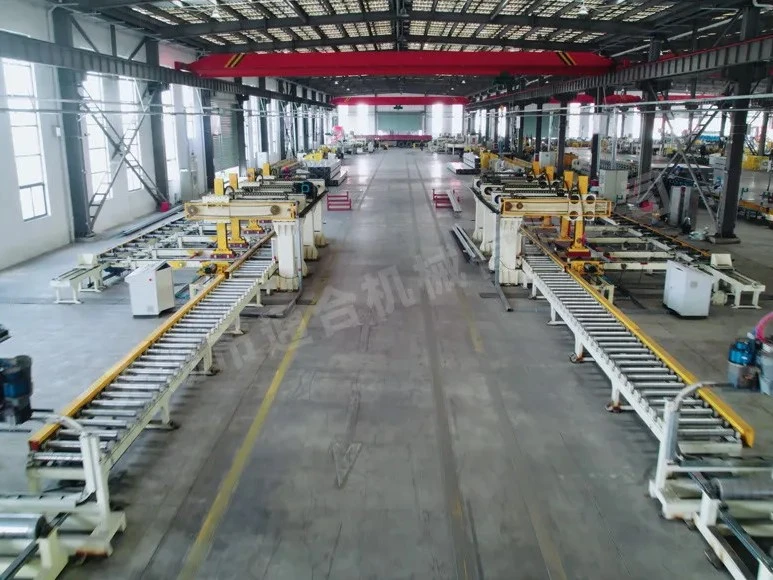
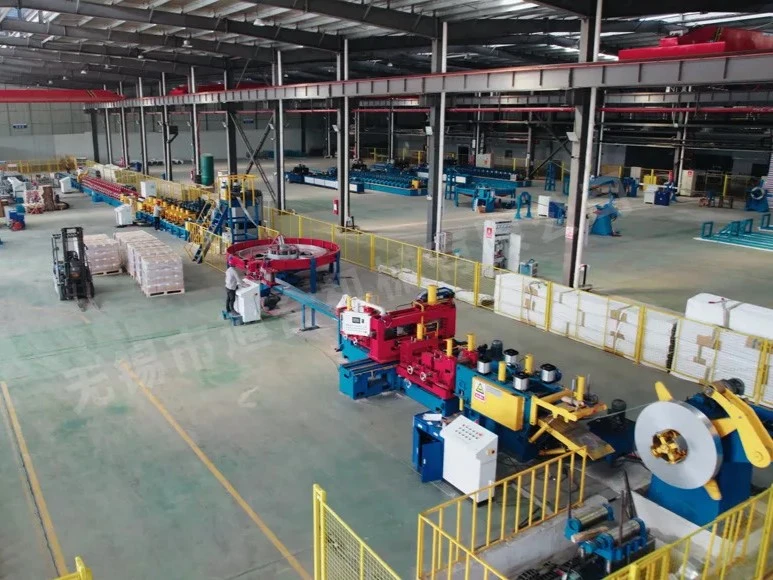
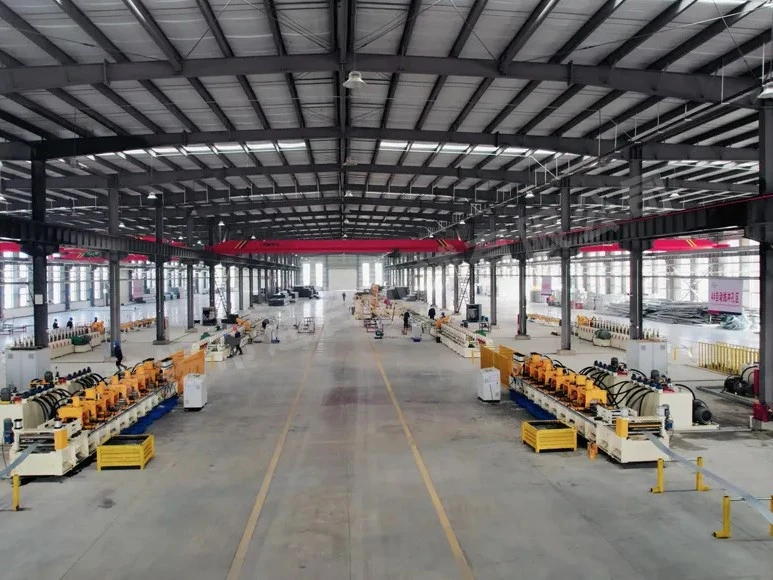
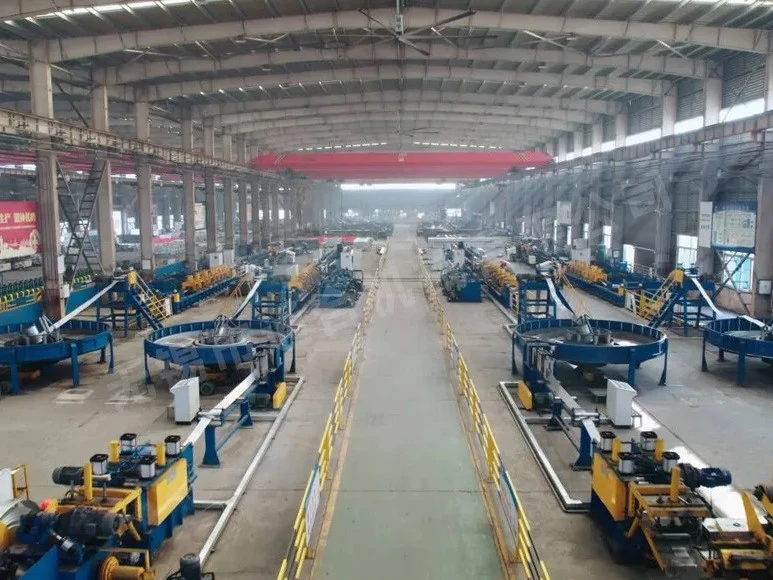
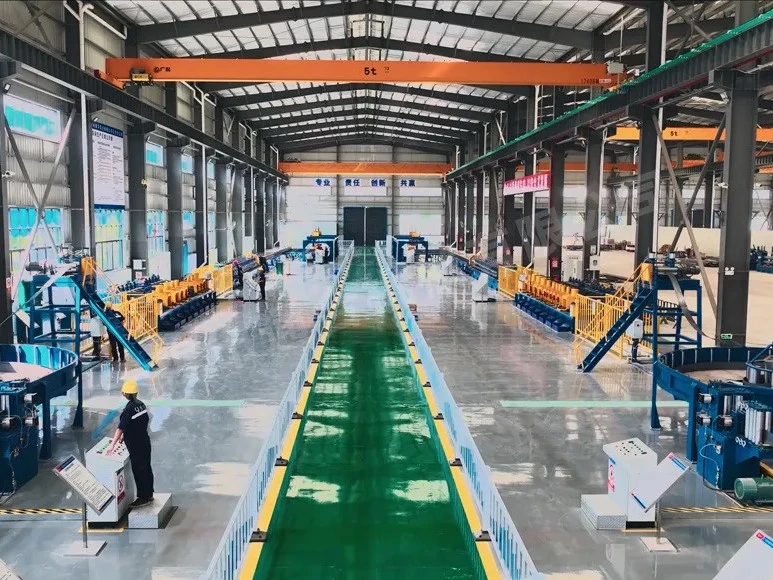
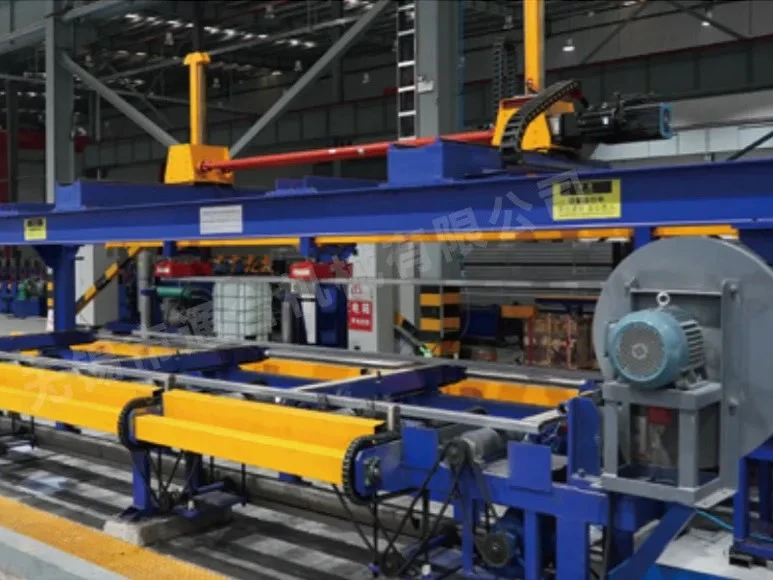
Wuxi Tonghe Machinery manufactures cold roll forming equipment in Wuxi, China. Since 2011, the company has built CZ purlin machines, PV bracket lines, guardrail lines, cable tray lines and custom profile lines for customers in over 30 countries. The factory covers about 30,000 m² and employs 200+ staff, including a 50+ R&D team. Production is ISO9001 certified and products carry CE marking.
About Us Certifications Engineering Cases
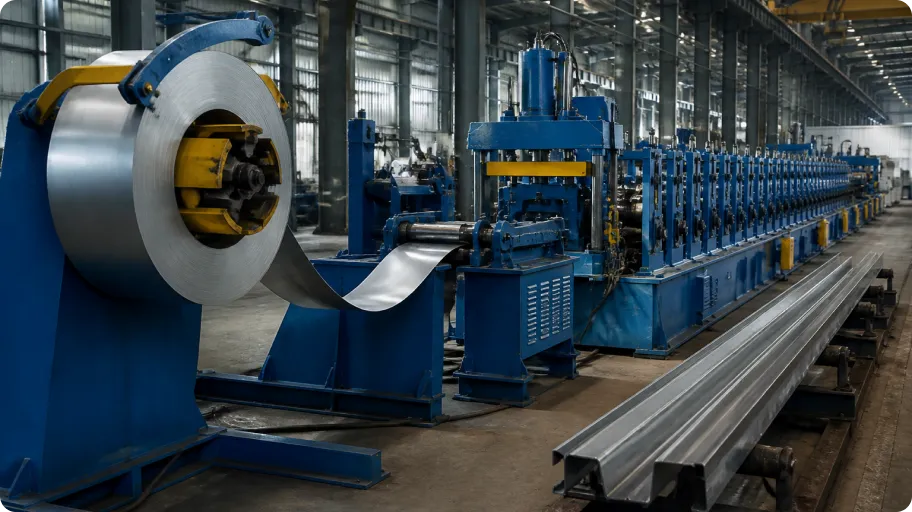
The full flow from decoiling to stacking: decoiling, leveling, servo feeding, punching, roll forming, hydraulic cutting and automatic stacking. The line runs continuously with one operator supervising, and manual handling between processes is removed.
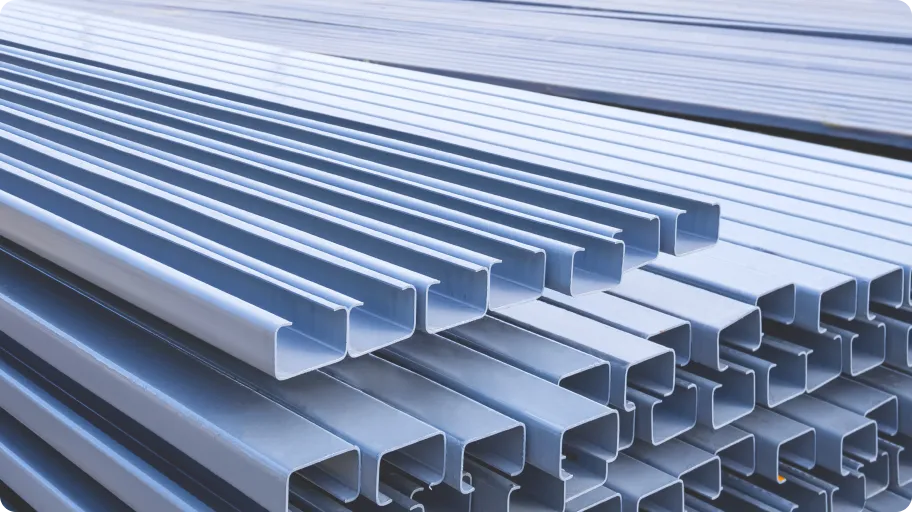
Equal-section metal profiles from coil: roofing and wall sheets, floor decking, purlins, solar mounting profiles, seismic and tunnel brackets, building planks and similar sections. Roller tooling is designed per product drawing.
Standard lines run from twenty to thirty-five meters per minute depending on the profile, thickness and punching requirements. High-speed configurations are available for large-volume products.
Yes. Forming stands, up to eighteen for complex sections, plus punching units, cutting type and stacking method are all configured per customer product. Send your section drawings and output target, and we will propose a configuration.
Products are saved as recipes on the PLC touch screen. Recalling a recipe resets length, hole pattern and batch quantity in one step, and a typical changeover takes three to five minutes.
Galvanized steel, cold rolled steel and aluminum coil are standard options. Strip thickness and yield strength are confirmed during tooling design, so the frame and roller set match your material.
Yes. Our engineers travel to your site for installation, commissioning and operator training, and remote video guidance continues after handover. The main machine is warranted for twelve months and core components for eighteen months, with spare parts free of charge during that period.
The term automatic roll forming machine covers everything from a single motorized forming station to a complete line that runs without manual handling. This guide explains what full automation actually includes, so you can compare quotations on the same basis.
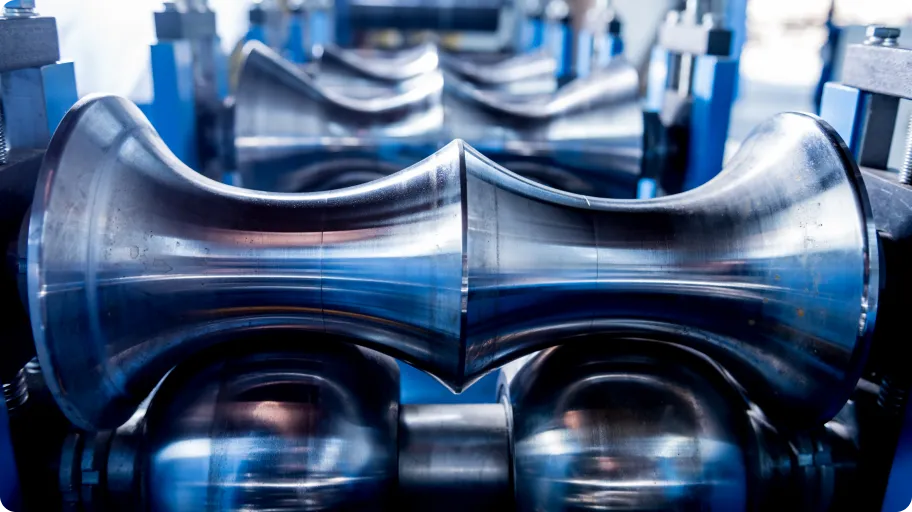
A complete cold roll forming machine line starts with a decoiler, manual or hydraulic, that holds the coil. The strip passes through a leveling unit that removes coil set, then a servo feeder positions it for the punching unit, where holes and notches follow your drawing. Forming stations bend the strip into the final profile, a hydraulic cutting unit cuts it to length, and an auto stacker collects the finished pieces. On a fully automatic line these steps run as one continuous flow, and one operator supervises the whole line instead of moving material between machines.
Automatic lines pay off on equal-section profiles produced in volume from coil: roofing and wall sheets, floor decking, purlins, solar mounting profiles, seismic and tunnel brackets, building planks and similar sections. A sheet metal roll forming machine built this way holds dimensions steady across long runs. If your order book changes products frequently, recipe control on the PLC keeps changeover to a few minutes, so the line stays productive even with a mixed product schedule.
There is no universal configuration. The number of forming stations follows the complexity of your section, up to eighteen stands for deep or multi-bend profiles. Punching units follow your hole pattern, the cutting type follows your thickness and accuracy requirement, and the stacking method follows the product length and weight. Gearbox transmission keeps forming force and speed stable across all stands. A supplier who quotes without seeing your section drawing is guessing at all of these.
Standard lines run from twenty to thirty-five meters per minute. Real output per shift depends on more than the nominal speed: punching density slows the feed, and frequent product changes add changeover time. When you plan capacity, calculate from your actual product mix and batch sizes, and ask for the line speed at your thickness rather than the catalogue maximum.
Five items let a manufacturer configure a roll forming line correctly the first time: the section drawing with all dimensions, strip thickness and material grade, the hole pattern, your target output, and your plant voltage. With these on hand, the station count, motor power, punching unit and stacker can all be specified without assumptions.
We're THRONCH, a direct factory in Wuxi, China, building custom roll forming lines for purlins, highway guardrail, cable tray, strut channel, and welded tube. Send us your profile drawing and get a line proposal within 24 hours.
Talk to our engineers