Steel structure factories and PEB fabricators order purlins, girts and frames by project, and every building mixes sections, sizes and hole patterns. Equipment for this industry must switch sizes quickly and punch every connection hole inline, because secondary drilling on site destroys both schedule and margin.
PEB factories produce building kits where every purlin and girt is cut and punched to the kit drawing. Automatic changeover and recipe control let one line serve many building designs per shift.
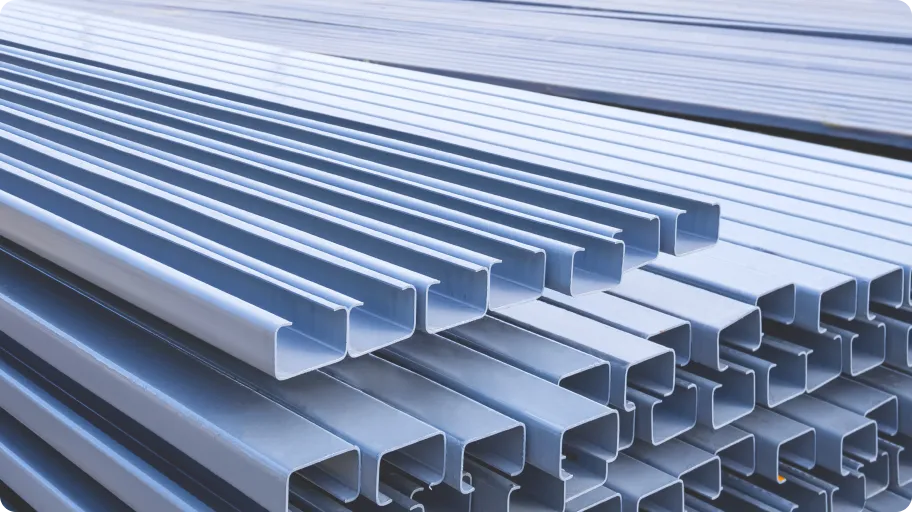
Workshop and warehouse frames use Z purlins on the roof and C sections on the walls, in long repeated runs. Line speeds of ten to thirty meters per minute keep pace with fabrication demand.
Distribution buildings have wide spans and large purlin counts. In-house production cuts the freight and supplier margin on thousands of meters of identical sections.
Farm buildings order lighter galvanized purlins in mixed lengths. Quick recipe switching handles the short, varied batches typical of agricultural orders.
Commercial projects add door frames and hat channels to the purlin list. Covering all three product families in one plant simplifies procurement for the whole building package.

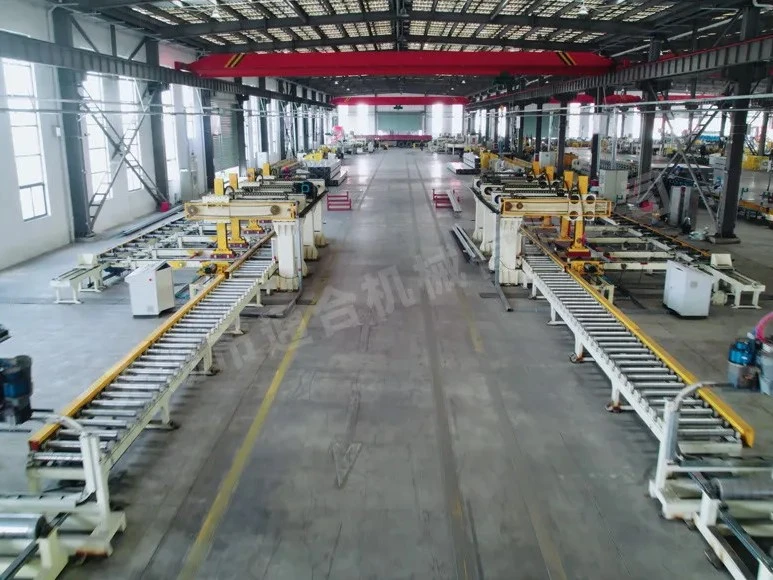
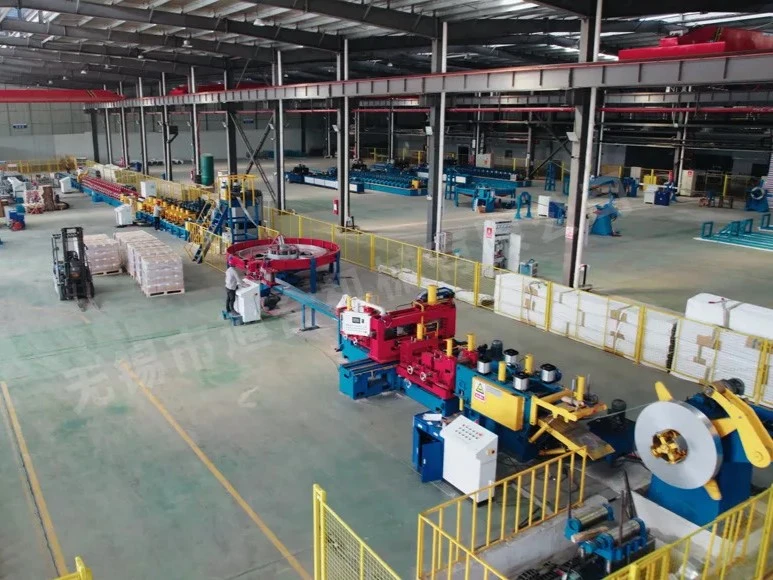
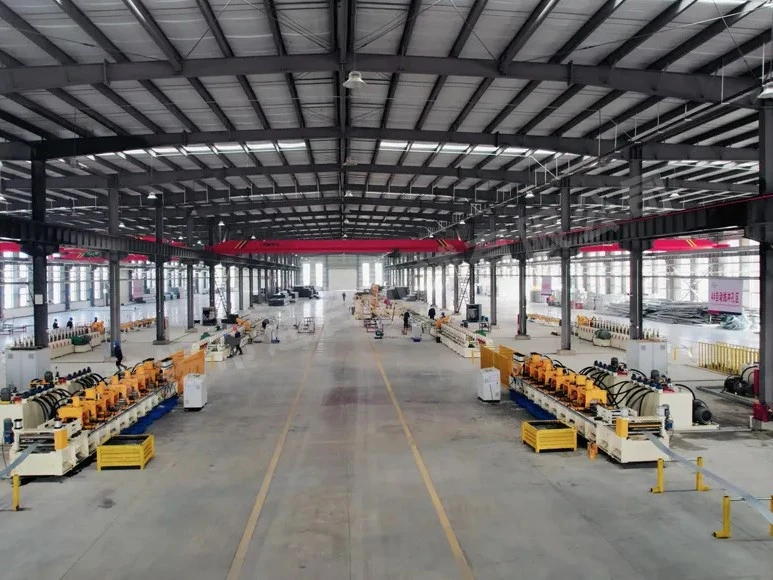
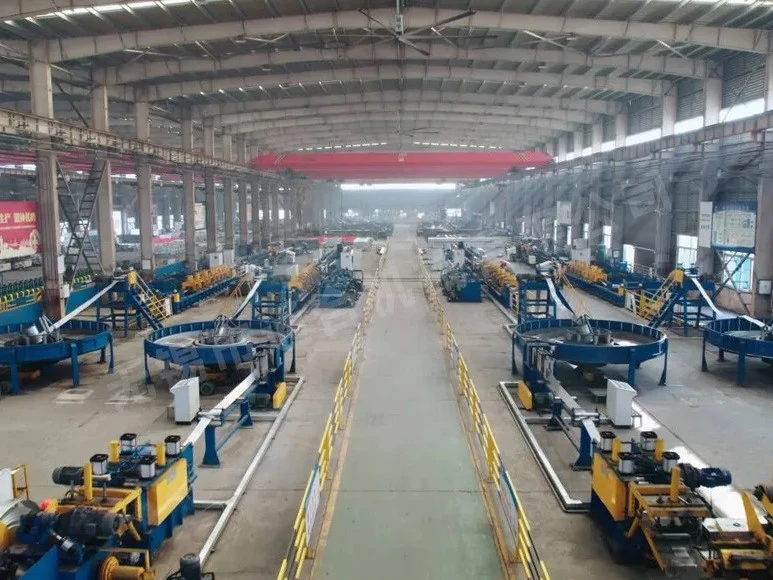
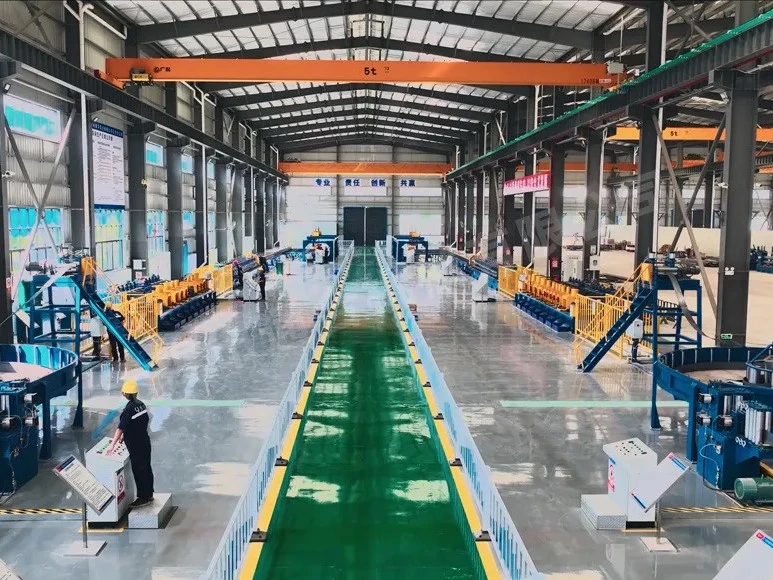
Wuxi Tonghe Machinery manufactures cold roll forming equipment in Wuxi, China. Since 2011, the company has built CZ purlin machines, PV bracket lines, guardrail lines, cable tray lines and custom profile lines for customers in over 30 countries. The factory covers about 30,000 m² and employs 200+ staff, including a 50+ R&D team. Production is ISO9001 certified and products carry CE marking.
About Us Certifications Engineering Cases
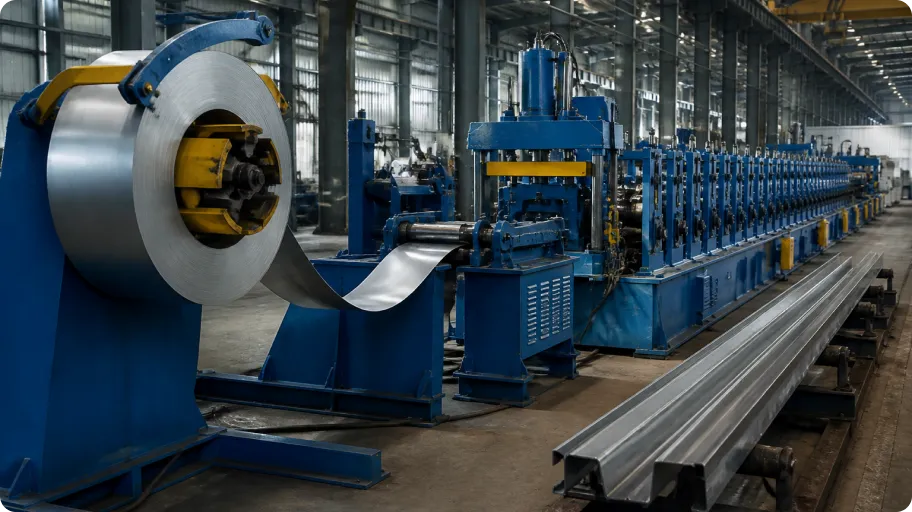
The core is a CZ purlin line for roof purlins and wall girts. Most plants add a hat channel line for secondary support members and a door frame machine when the building package includes steel doors.
Yes. One line covers C, Z and U sections with automatic changeover from the PLC, and web heights from eighty to four hundred millimeters are set by motor-driven adjustment.
Web heights from eighty to four hundred millimeters in strip from one point five to three point five millimeters, with cut lengths from one to twelve meters set on the touch screen.
Yes. Web holes for anti-sag bars, flange holes for panels and splice bolt holes are punched inline before forming, with patterns stored as recipes.
Purlin lines run at ten to thirty meters per minute depending on thickness. High-strength thick strip runs slower, and thin galvanized strip runs at the top of the range.
Yes. A fully automatic CZ purlin line is running in the United States, and our machines serve steel structure companies and profile processors in multiple export markets.
Send the section drawings with dimensions, strip thickness and material grade, hole patterns, target output and plant voltage. We specify tooling and configuration against these five items.
Equipping a steel structure plant is different from buying a single machine. The building package decides the machine list, and the order pattern decides the automation level. This guide covers the points worth checking before you invest.
A typical steel building needs roof purlins, wall girts, and often hat channels and door frames. Map your machine list against the buildings you sell: purlin lines carry the volume, and hat channel and door frame machines complete the package. Buying the package from one supplier keeps controls and wear parts common across the plant.
PEB factories run many building designs per week, so automatic changeover and recipe control pay back quickly. Profile processors with long single-section runs can start with simpler lines. Be honest about your order mix, because automation you never use is capital standing still.
Every purlin carries connection holes, and buildings assembled from pre-punched members go up without site drilling. Confirm that punching units follow your structural drawings and that hole programs store as recipes. This single feature separates production lines from profile-only machines.
Steel structure purlins typically run web heights from eighty to four hundred millimeters in one point five to three point five millimeter strip, galvanized or high-strength grades. Share your real size list and grade range before ordering, because roller tooling and frame strength are specified against them.
Five items let us specify a steel structure line correctly: section drawings with dimensions, thickness and material grade, hole patterns, target output, and plant voltage. With these confirmed, the configuration, tooling and layout are quoted against your production plan.
We're THRONCH, a direct factory in Wuxi, China, building custom roll forming lines for purlins, highway guardrail, cable tray, strut channel, and welded tube. Send us your profile drawing and get a line proposal within 24 hours.
Talk to our engineers