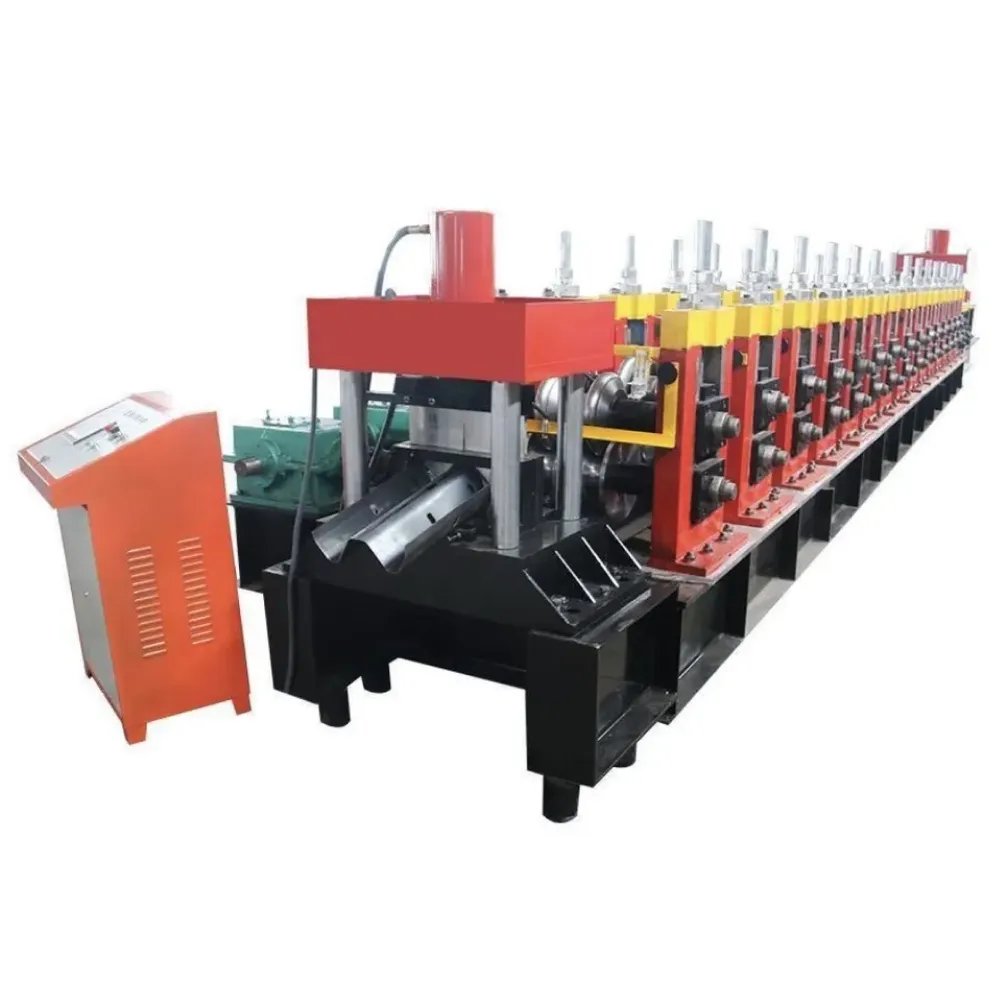
What a Strut Channel Roll Forming Machine Produces
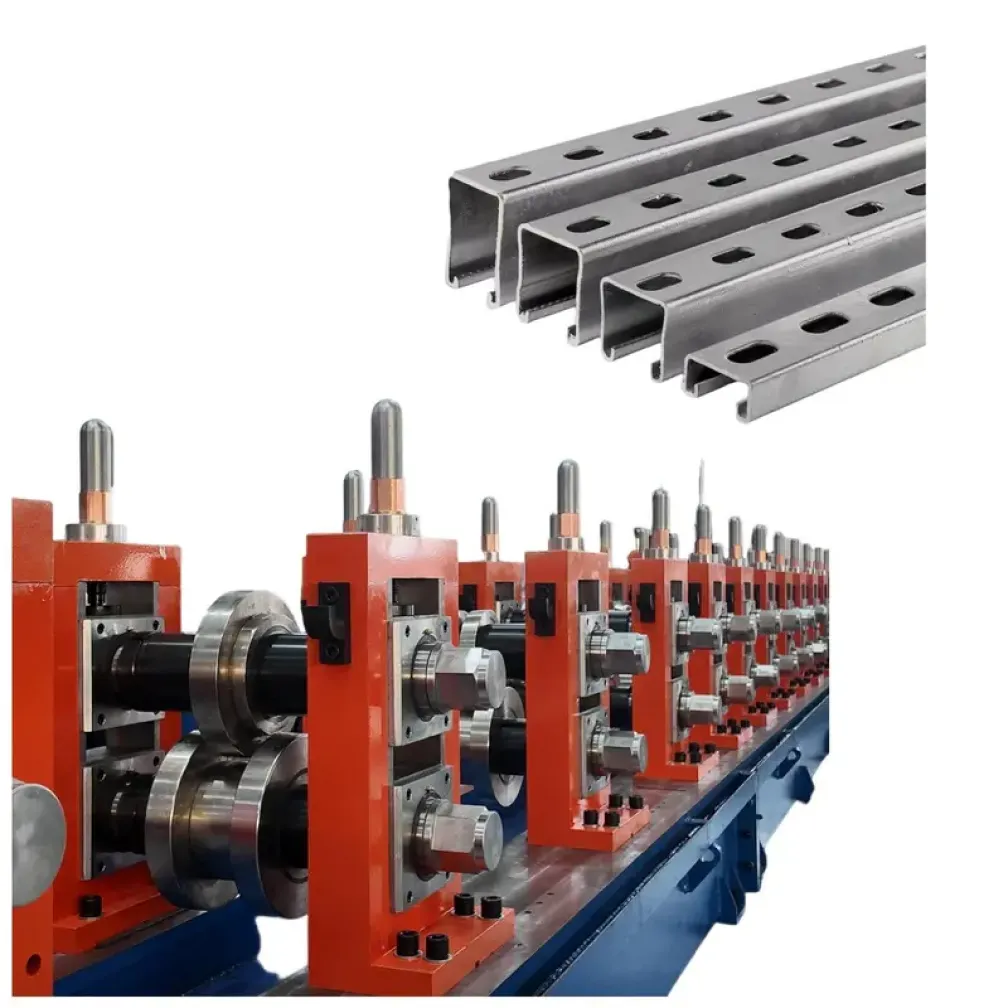
A strut channel is a standardized slotted framing channel: a U-shaped section with inward-turned lips and a regular pattern of slots along the web. Together with channel nuts and bolted fittings, it forms a modular framing system that assembles without welding or drilling on site. This product family, built around the 41-series dimensional standard, carries solar panels on roofs and ground arrays, braces pipes and ducts against seismic loads, and supports cable and mechanical services in buildings. The machine produces these channels from coiled strip in one continuous pass, with slots punched inline and lengths cut while the line runs. Buyers sometimes reference this product under the Unistrut trademark; the line produces channels to the same dimensional standard and has no affiliation with that brand.
Light-Gauge and Heavy Builds
Two configurations cover the strut channel market. The light-gauge build forms 0.3-1.5 mm strip at up to 30 m/min. It suits framing channels, cable support profiles and light mounting rails where speed and material economy decide the margin. The heavy build covers the U41-U82 range in 1.5-3.0 mm strip at 15-40 m/min, aimed at load-bearing solar mounting members and seismic bracing channels. The two builds differ in mill stand sizing, shaft diameter, punching tonnage and cut-off capacity, so the choice is fixed at order stage from the product mix and thickness range.
Slot Punching Defines the Product
The slots are what make a strut channel a system component rather than a plain profile. Fittings bolt through the slots at any position, which gives installers full adjustment along the channel length. Slot dimensions, pitch and web hole patterns follow the system standard of the market being supplied, and they must land consistently along every meter of channel. On this line, servo-fed die stations punch the strip before forming, so slot position is fixed while the material is still flat and easy to control. Changing to a different slot standard means exchanging the die cassette, not rebuilding the line.
Process Flow
- Decoiler and straightener prepare the strip
- Servo feeder sets the pitch for the die punching stations
- Roll forming mill shapes the channel and its lips
- Sizing pass calibrates the final dimensions
- Tracking hydraulic cut-off shears to length without stopping the strip
- Output table receives finished channels for bundling
Main Applications
- Solar PV mounting rails and structural members for rooftop and ground-mounted arrays
- Seismic bracing channels for pipe, duct and cable support systems
- MEP support frames, ceiling grids and equipment mounting in commercial buildings
- Light framing and display structures built from slotted channel
What To Prepare Before Requesting a Quote
- Channel drawing with section dimensions, lip form and slot pattern
- Thickness range and strip surface: pre-galvanized, black steel or galvanized after forming
- Target channel sizes and their expected share of monthly output
- Required cut lengths and bundling method
- Site power specification and preferred automation level
FAQ
What is the difference between a strut channel and a plain U channel?
A strut channel has inward-turned lips and a standard slot pattern, and works as part of a modular framing system with channel nuts and fittings. A plain U channel has straight flanges without lips and is used as a general structural or mounting profile. The two products need different roll tooling and punching dies, and the strut line on this page is built for the slotted system channel.
Which channel sizes can one line cover?
The standard tooling set covers the 41-series size family. Within the family, size changes are adjustments set on the control panel. Channels outside the family are quoted with dedicated tooling.
Can the line run pre-galvanized strip?
Yes. Pre-galvanized strip is the common choice for strut channels because the product needs no coating step after forming. The rollers and dies are specified for coated strip to protect the zinc layer through forming and punching.
How are different slot standards handled?
Each slot standard uses its own die cassette in the punching station. Exchanging the cassette switches the pattern, so one line can serve several regional standards across the year.
What are the delivery and installation terms?
Standard builds ship in 30-45 days, customized lines in 60-90 days, after a factory trial run with the order material. THRONCH engineers complete installation and commissioning at the buyer site and train the operating team before handover.