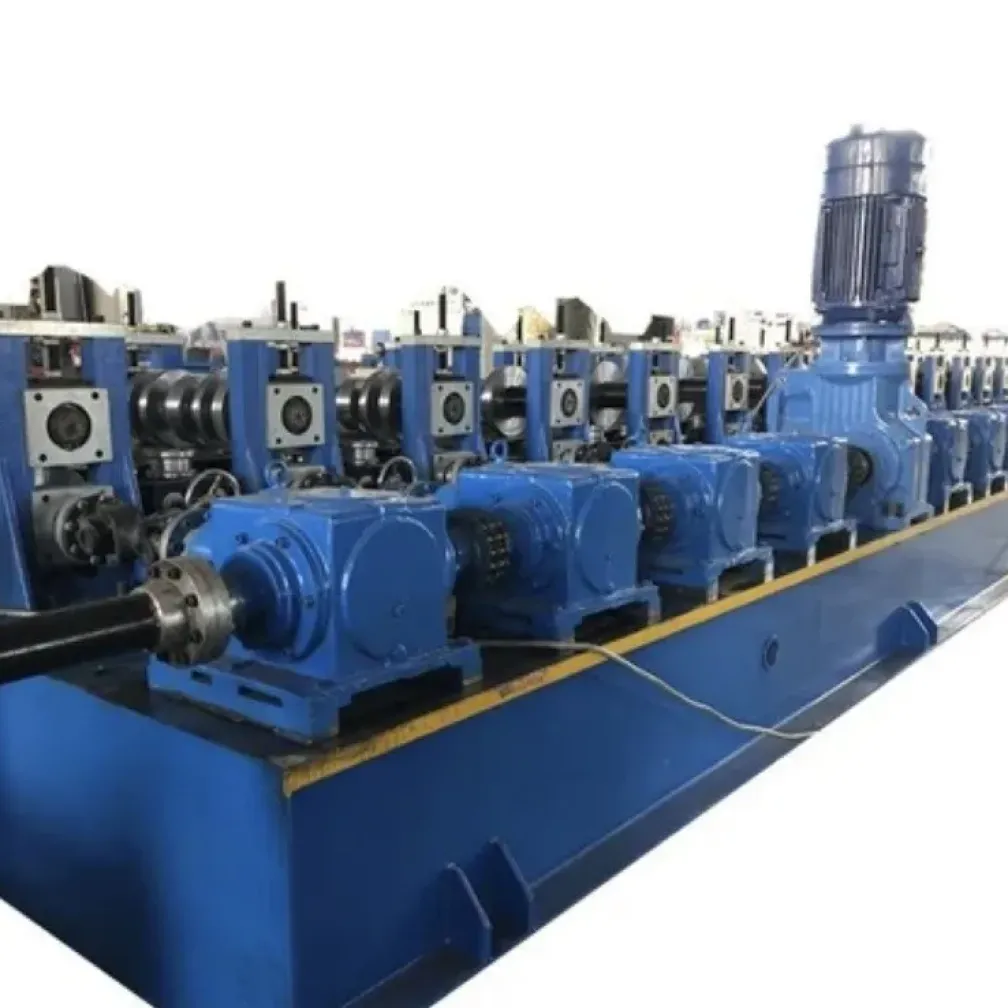
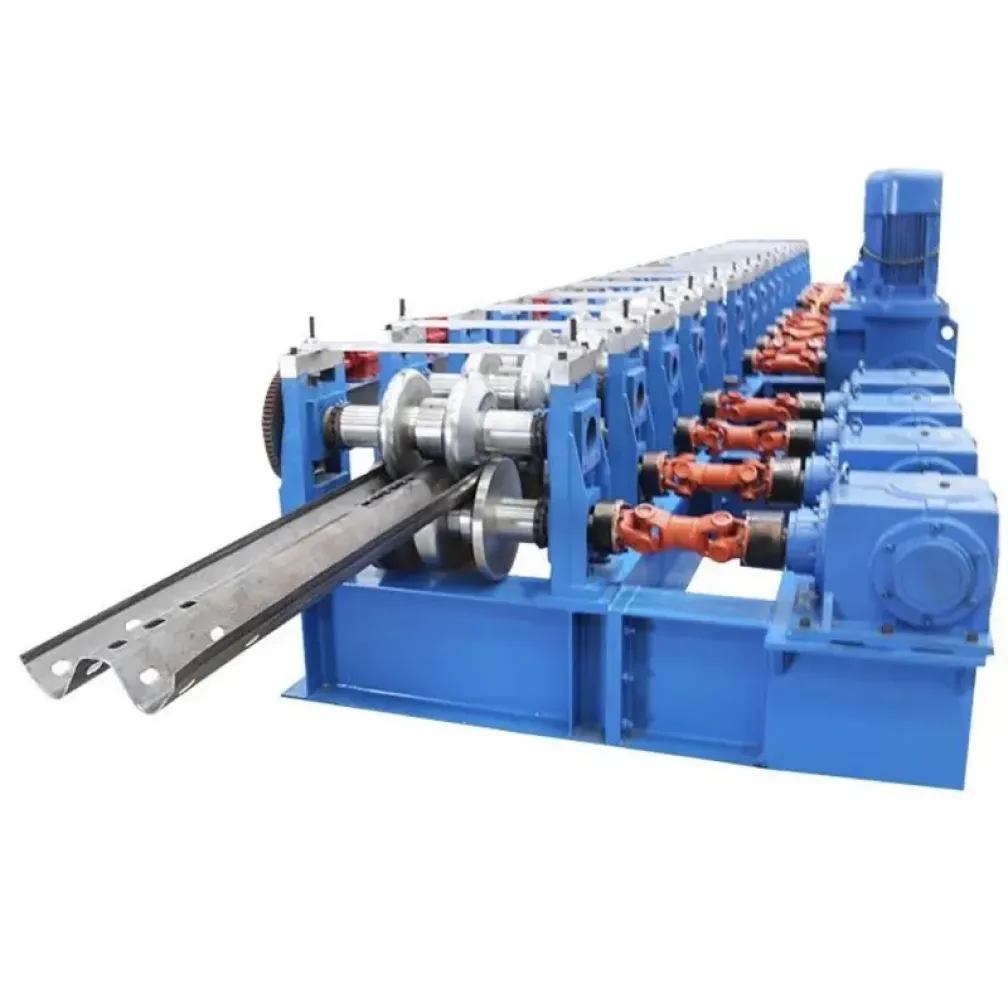
What a Three-Wave Guardrail Roll Forming Machine Produces
A three-wave guardrail panel, called thrie-beam in most specifications, adds a third corrugation to the familiar W-beam shape. The extra wave raises the rail height and section stiffness, so the barrier holds larger vehicles and reaches the higher containment classes that road authorities write into bridge, median and high-risk section designs. Panel geometry follows the barrier standard of the destination market. The machine on this page forms these panels from high-strength strip, punches fixing holes ahead of the mill and cuts panels to installation length on the move.
Where Three-Wave Panels Are Specified
Road design reserves thrie-beam for locations where a leaving vehicle does the most damage: bridge decks and approaches, narrow medians between opposing carriageways, steep embankments, tunnel portals and transitions to rigid parapets. The wider rail face also suits retrofit work, because a three-wave panel can mount on the post spacing of an existing two-wave installation when a road section is upgraded to a higher containment class. For a barrier producer, three-wave capability opens the tender list that two-wave alone cannot reach.
Forming the Third Wave
The deeper corrugated section of a thrie-beam panel moves more steel per pass than a two-wave profile, and it does so in 2.0-4.5 mm high-strength strip. Pass design spreads the deformation across 15-24 stands so the third wave develops gradually and springback stays predictable at the final stands. Quenched GCr15 or Cr12 rollers at HRC 58-63 carry the contact load, and drive power between 55 and 120 kW is specified against the thickness and speed target. The hydraulic stiffener unit presses the reinforcing rib before the servo tracking flying cut finishes each panel within a 2 mm length error.
One Plant, Both Wave Profiles
Most barrier markets buy two-wave panels for general mileage and three-wave panels for the locations described above. The line architecture reflects this reality: coil handling, leveling, punching, cutting, straightening, conveying and stacking serve both profiles, while the forming section carries the tooling of the specified wave. A plant supplying both profiles orders the second forming set with the line, and switching between products then stays a planned tooling operation. The product mix stated at inquiry decides how the forming section is laid out.
Main Applications
- Bridge guardrails and parapet transition sections
- Median barriers between opposing carriageways
- High-risk expressway sections and tunnel approaches
- Containment upgrades on existing road corridors
What To Prepare Before Requesting a Quote
- Panel drawing with wave geometry, thickness and hole positions
- Barrier standard and containment class of the target market
- Steel grades and strip coating specification
- Expected share of three-wave against two-wave in the order book
- Site power supply and preferred control brands
FAQ
What is the difference between three-wave and two-wave guardrail?
Two-wave W-beam is the general roadside barrier for standard highway mileage. Three-wave thrie-beam adds a corrugation for higher containment on bridges, medians and high-risk sections, and its wider face suits retrofit upgrades on existing post spacing. The two profiles share the downstream sections of this line and use separate forming tooling.
Which standards do three-wave panels follow?
Panel geometry follows the barrier standard of the destination market, for example AASHTO M180 based designs or EN 1317 compliant systems. The panel drawing in the inquiry fixes the roll tooling and the punching pattern.
Which strip grades does the line form?
The specified strip range is 2.0-4.5 mm in Q235, Q700HL and S355MC grades. Higher-strength strip is the common choice when the containment class writes tensile requirements; pass count, roller material and drive power are then matched to that grade at order stage.
Can the line switch between two-wave and three-wave production?
Yes. Punching, cutting, conveying and stacking are shared between the profiles. Switching products is a forming-tooling operation planned with the line order, so both forming sets are delivered together when a plant supplies both markets.
What delivery and installation terms apply?
Standard configurations ship in 30-45 days and customized lines in 60-90 days, after a test run on the order strip. THRONCH engineers install and commission the line on site and train the crew before handover.