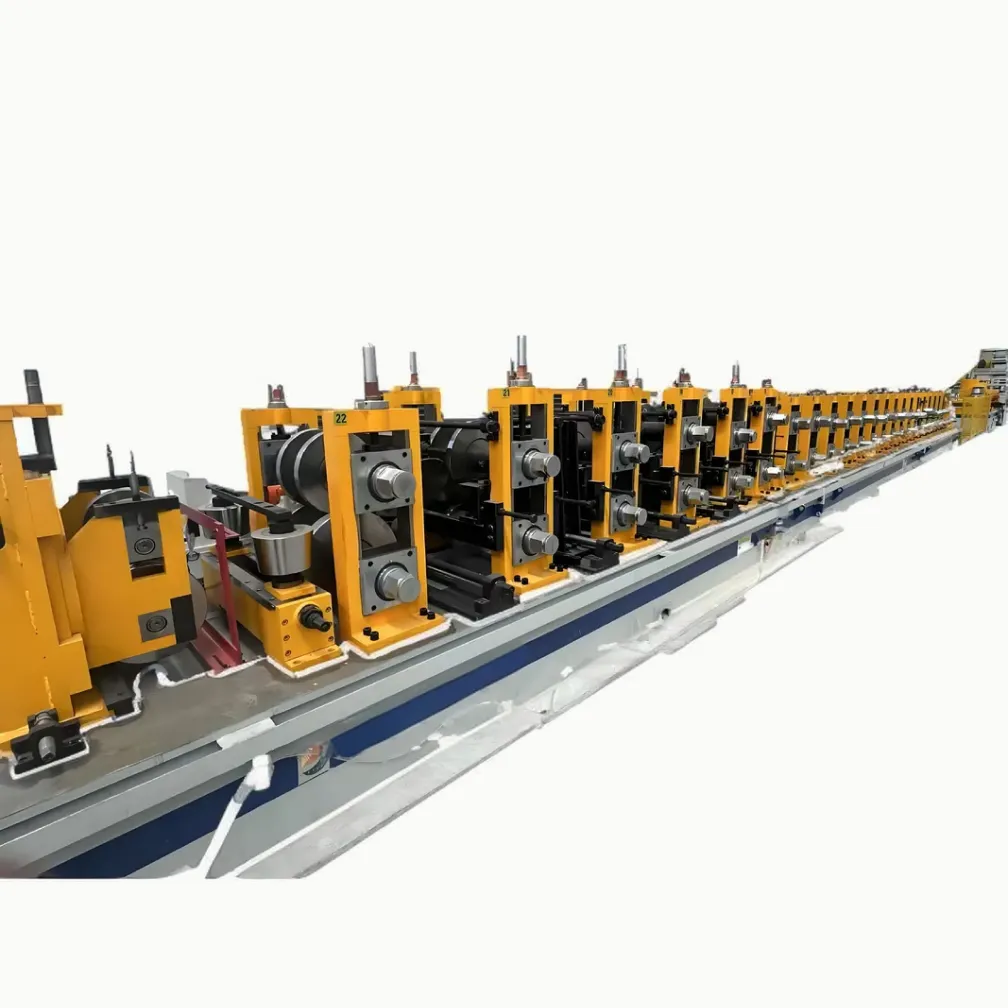
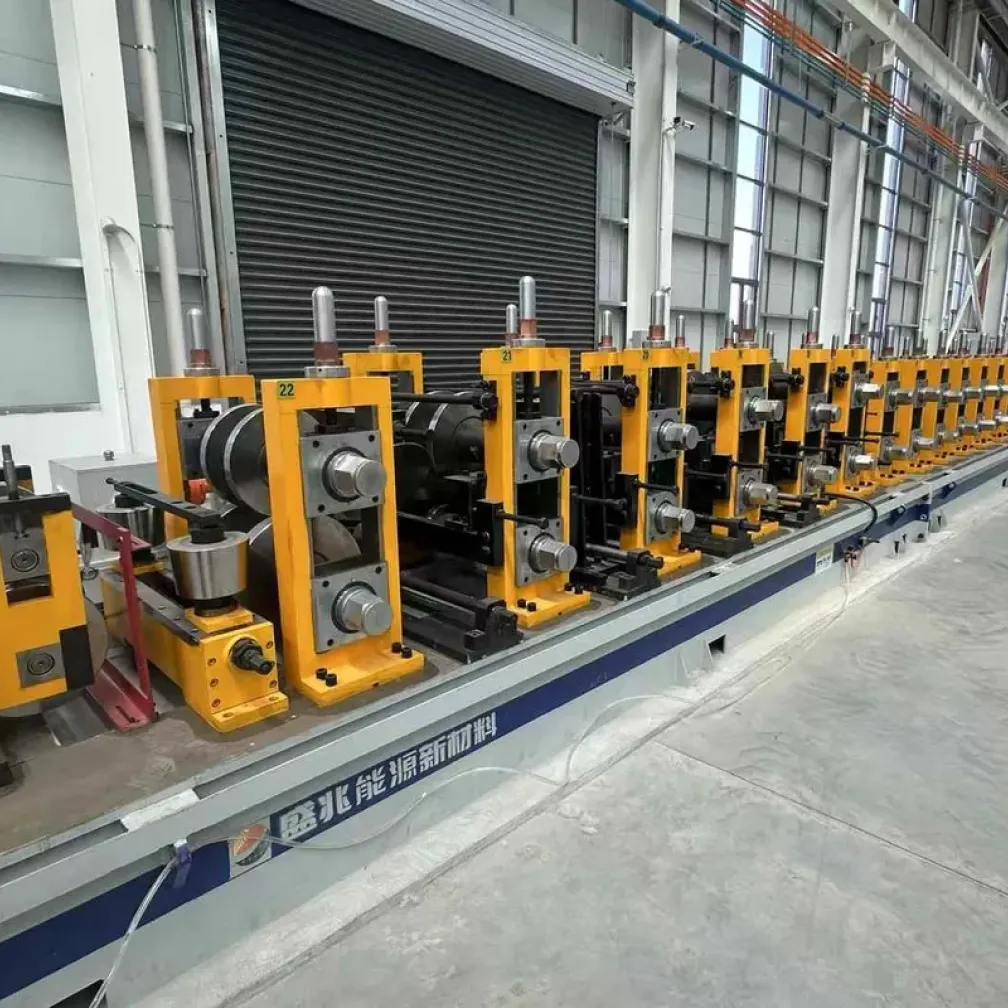
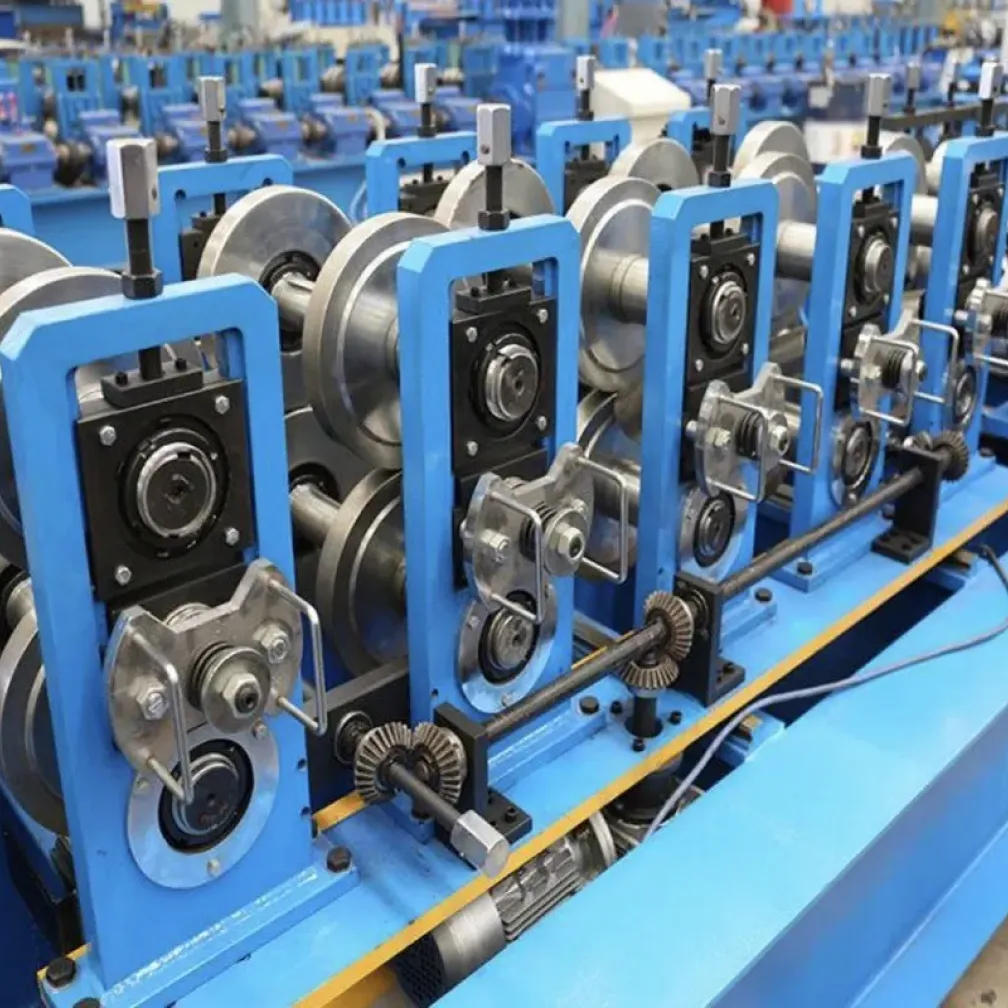
What a Z Purlin Roll Forming Machine Produces
A Z purlin is a cold-formed thin-walled steel section with a Z-shaped cross section: two flanges of equal width point in opposite directions, joined by a vertical web. The geometry gives the section a high strength-to-weight ratio and one decisive installation advantage: adjacent purlins can lap over each other at the supports. The machine produces these sections from coiled strip in a continuous process, with section height from 100 to 350 mm, thickness from 1.5 to 6 mm depending on the build, and web or flange holes punched inline to the project bolt pattern.
Why Z Purlins Carry Continuous Spans
Because the flanges of a Z section nest into the next purlin, two sections overlap above a support and act as a continuous beam across several bays. A continuous purlin line sheds bending moment into the adjacent spans, so the same section carries a higher load, or a lighter section carries the same load. For large-span factory and warehouse roofs this typically reduces purlin steel tonnage and the number of individual members to hoist and bolt. C purlins, by contrast, meet end to end at the support and work as simply supported members. The choice between the two sections is made in the structural design stage; the machine side can be prepared for either.
Standard Line Configuration
The brochure configuration for this line runs as follows:
- Hydraulic uncoiler with coil loading car
- Shearing and butt welding unit for joining coil ends
- Accumulator loop for non-stop running during coil change
- Leveling unit and servo-fed punching stations
- Roll forming mill sized to the section height range
- Fixed-length hydraulic cut-off and output roller table
The accumulator and butt welder are optional stations. Plants running long shifts at 20 m/min and above usually include them, because coil changes then cost no production time. Smaller shops can start with the direct uncoiler-to-mill layout and add the loop stations later.
Dedicated Z Line or C/Z Interchangeable Line
A dedicated Z line is the right choice when the plant produces Z purlins in steady volumes: tooling is optimized for the Z profile, changeovers are only size adjustments set on the touch screen, and the line reaches its rated speed more easily. A C/Z interchangeable line suits fabricators who supply both sections to the construction market, for example Z purlins for roofs and C sections for wall girts. The change between sections is made by adjusting the stands from the control panel, without replacing rollers. State the planned product mix at inquiry stage, because the decision affects mill design, cut-off tooling and price.
Main Applications
- Roof purlins for steel structure factories, warehouses and logistics parks
- Prefabricated building components and modular construction frames
- Support members for warehouse shelving and racking systems
- Agricultural buildings, livestock sheds and equipment shelters
What To Prepare Before Requesting a Quote
- Z section drawing with section height, flange width, lip size and lap length
- Strip thickness range and material grade for the intended projects
- Hole pattern requirements, if purlins arrive on site pre-punched
- Monthly output target and preferred line speed
- Site power supply specification and preferred electrical component brands
These points allow the pass design, motor power selection and automation level to be fixed in a single technical proposal.
FAQ
What is the difference between a Z purlin machine and a C purlin machine?
The mill stands and roll tooling differ because the two sections have different geometry. A dedicated machine runs one section at its best speed and accuracy. An interchangeable line produces both C and Z sections by adjusting the stands from the control panel, which suits plants supplying mixed project orders.
Which section heights can this line cover?
The standard tooling range covers 100-350 mm section height, which includes the common purlin sizes for industrial roofs. Sizes outside this range are quoted as custom tooling.
How fast does the line run?
Forming speed is adjustable between 5 and 25 m/min. Thick strip above 3 mm and sections at the large end of the range run at the lower speeds to hold profile accuracy.
How long does a size changeover take?
A size change inside the same section family is set on the touch screen and confirmed with a short trial piece. On the C/Z interchangeable build, switching sections adds a stand adjustment step. Neither case requires roller replacement.
What is the delivery and installation schedule?
Standard configurations ship in 30-45 days; customized lines take 60-90 days. THRONCH engineers handle installation and commissioning on site, normally within one week, and train the operating team before handover.