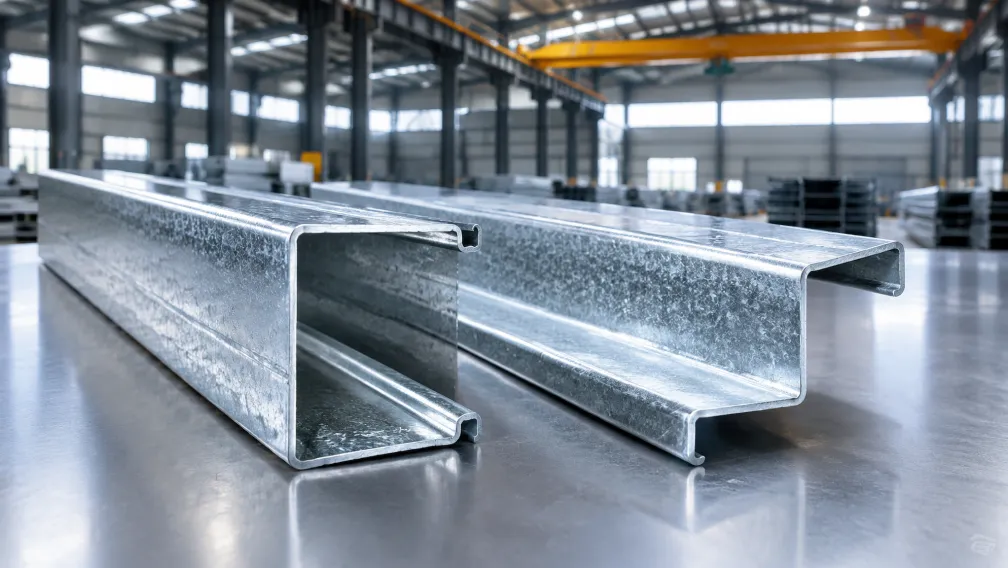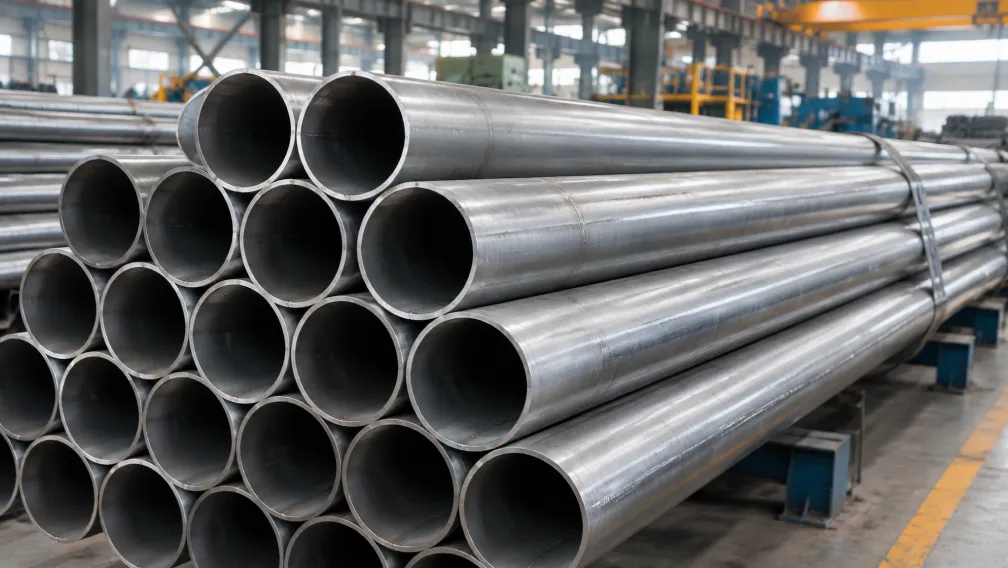


The first two weeks of November 2026 confirmed that the global steel trade map has been redrawn around tariffs, quotas, and origin rules. In Europe, importers now file melt-and-pour origin declarations under a safeguard regime that cut duty-free quotas by nearly half and doubled the out-of-quota duty to 50 percent. In North America, Mexico is blocking Asian transshipments while the United States holds Section 232 duties at 50 percent on the full customs value of steel products. In China, an export licensing policy in force since January has trimmed finished steel exports for ten consecutive months. Each measure has been reported separately; taken together, they describe one structural shift that matters to every fabricator buying strip or selling sections across borders: steel trade is regionalizing, and production capacity is following the tariff walls.
The EU Safeguard: Smaller Quotas, 50 Percent Duties, and the Melt-and-Pour Rule
The European Union replaced its 2018 steel safeguard with a permanent import regime on July 1, 2026, after the Council adopted the measure on June 8 with 25 of 27 member states in favor. The numbers are a hard tightening: duty-free tariff-rate quotas were cut by about 47 percent to roughly 18.3 million tonnes a year, and the out-of-quota duty rose to 50 percent, up from 25 percent under the old safeguard. Quotas are allocated by product category based on 2022 to 2024 import shares, managed quarterly, with no carryover of unused volume.
What the Melt-and-Pour Rule Adds
From October 1, 2026, importers must declare where the steel was first produced in liquid form and cast into its first solid state. The rule currently functions as a transparency measure with no volume restrictions attached, but its direction is clear: it closes the re-rolling route by which slab or coil from a high-tariff origin enters the EU as a product of a low-tariff third country. Importers need verifiable melt-and-pour evidence from their suppliers, and suppliers who cannot document origin will find EU buyers walking away rather than risking a non-compliant entry.
The knock-on effects travel further than the EU's borders. Turkey, a major importer of Chinese semi-finished steel for re-rolling into the European market, saw its EU hot-rolled coil quota cut by 59.7 percent, which directly reduces Turkish demand for Chinese upstream material. China's direct flat-steel exposure to the EU is small, about 3 to 5 percent of its flat exports, because anti-dumping duties had already constrained that channel, so the quota cuts hit Chinese exporters mainly through these indirect routes.
North America Closes Its Perimeter
Mexico's government is now actively working to prevent steel transshipments through the country and has already reduced steel and aluminum imports from outside North America by about 30 percent, Reuters reported on November 12. The move addresses the long-standing practice of routing Asian steel through Mexican ports into the US market, and it effectively extends the North American tariff perimeter south to cover Mexico's own import system.
Inside the United States, Section 232 duties on steel, aluminum, and copper stand at 50 percent, and since April 6, 2026 they apply to the full customs value of the product, not just its metal content. The domestic market reflects the wall's effect: SMU's November survey puts average lead times for sheet and plate into late January 2027, with some mills not quoting availability until mid-to-late February, the longest lead times since the post-Covid snapback of 2021. Only 5 percent of surveyed buyers report mills willing to negotiate on new spot orders, and open interest on CME hot-rolled coil futures has reached a record 849,240 short tons, up 66 percent from a year ago, as buyers hedge exposure they cannot cover with imports.
China's Export License Policy Trims the Outflow
At the other end of the trade flow, China's export licensing requirement, in force since January 1, 2026 and covering about 300 steel product types, is measurably slowing the outflow. General Administration of Customs data released November 10 shows finished steel exports of 95.495 million tonnes in January to October, down 2.3 percent year on year. October alone saw 9.854 million tonnes, down 6.1 percent from September, though still 0.74 percent above October 2025. Steel imports into China fell 11.6 percent over the same period to 4.461 million tonnes.
The context matters: China exported a record 119 million tonnes of finished steel in 2025 as domestic demand contracted, and the licensing regime is the policy answer to the trade friction that volume created. A 2.3 percent decline is modest, but the direction, combined with rising barriers in destination markets, marks the end of the export surge that defined the 2023 to 2025 market.
The November Picture at a Glance
| Jurisdiction | Measure in force | Effective | Effect on imports |
|---|---|---|---|
| European Union | New safeguard: quotas cut ~47% to 18.3 Mt/yr, 50% out-of-quota duty, melt-and-pour declaration | July 1, 2026; origin rule from October 1 | Quotas managed quarterly, no carryover |
| United States | Section 232 at 50% on full customs value | Rate since June 2025; value basis April 6, 2026 | Sheet and plate lead times into late January 2027 |
| Mexico | Anti-transshipment enforcement | Underway November 2026 | Steel and aluminum imports from outside North America down about 30% |
| China | Export licensing on about 300 steel product types | January 1, 2026 | Jan-Oct exports down 2.3% to 95.5 Mt |
None of the four measures is temporary in design. The EU regime is permanent with its first review only in July 2027, the US duties have no sunset clause, Mexico's enforcement is institutional rather than episodic, and China's licensing is a standing administrative system. Fabricators planning beyond a single quarter should treat regionalization as the base case, not a scenario.
What the Trade Walls Mean for Roll Forming Capacity
For fabricators and construction-product manufacturers, the strategic reading of the November news is straightforward: the era of solving demand growth with imported sections is ending in the three largest import markets, and local production is what replaces it. A fabricator in the EU can no longer count on quota availability for imported profiles and faces 50 percent duties above quota; a US buyer of guardrail, purlin, or cable tray sections faces lead times measured in months and a 50 percent wall on alternatives; a Mexican plant now operates behind a perimeter that its own government is policing. In each case the economics shift decisively toward producing sections locally from imported or domestic strip, which is a materially different proposition from importing finished profiles.
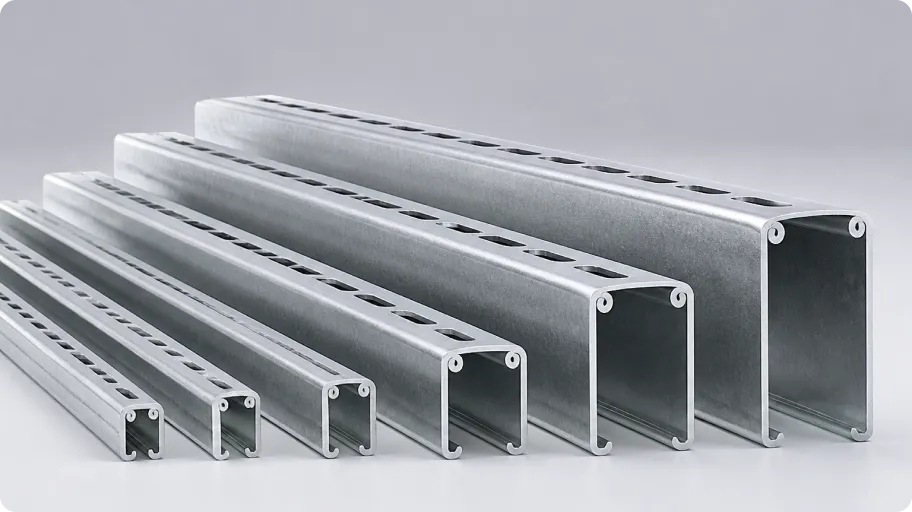
That shift is exactly where roll forming capacity enters the picture. Producing sections locally requires the kind of lines this industry builds: CZ purlin lines for the steel buildings going up behind tariff walls, highway guardrail lines for infrastructure programs that governments fund precisely because they cannot be imported efficiently, and cable tray lines for the data center construction that continues regardless of trade policy. Buyers planning capacity for 2027 should also note the documentation dividend: a plant that buys traceable strip and forms it locally starts with clean melt-and-pour documentation, which is now a market-access asset in the EU rather than paperwork.
The timing argument is the same one the supply data makes. With US mills quoting into late January 2027 and EU quotas resetting quarterly with no carryover, fabricators who commission local forming capacity in the first half of 2027 enter a market where the imported competition is structurally constrained. The window favors those who order equipment while their competitors are still calculating landed costs.
Plan Local Capacity Behind the Tariff Walls
THRONCH builds roll forming lines for exactly the localization wave now underway, from purlin and guardrail to cable tray and tube, with documentation-ready material tracking that simplifies EU melt-and-pour compliance. Send us your target sections, market, and volume, and our engineers will return a line configuration with delivery in 35 to 50 days for standard lines. Contact us at amy@thronch.com.
-

THRONCH
Cold Roll Forming Machine Manufacturer
THRONCH is a direct manufacturer specializing in custom cold roll forming lines and welded pipe mills. With over a decade of engineering expertise, we share technical insights and deliver high-precision