

The World Steel Association released its October 2026 Short Range Outlook in New Delhi on October 12, and the headline numbers look quiet: global steel demand essentially flat at 1,722 million tonnes in 2026, then up 1.7 percent to 1,752 million tonnes in 2027. The interesting story is underneath the headline. The downgrade from April's forecast, which expected 2.2 percent growth in 2027, comes almost entirely from China, while demand outside China is now forecast to accelerate to 4.0 percent growth next year, a rate the industry has rarely seen in recent times. For steel fabricators and roll forming operations planning capacity, the report answers the question that matters: where the demand will be, in which sectors, and when.
The Headline: A Flat 2026 and a Slower, Later Recovery
Worldsteel's economics committee, chaired by Alfonso Hidalgo de Calcerrada, framed the revision plainly: the recovery trajectory set out in April still holds, but it is proving slower and more gradual than expected. The 2027 tonnage forecast came down by about 10 million tonnes from the April figure, and the committee attributes almost the whole revision to China, compounded by energy-market disruption from the unresolved Middle East conflict.
China's steel demand is now expected to contract 2.0 percent in 2026 and a further 1.0 percent in 2027, as the property downturn continues and infrastructure investment stays negative. Manufacturing demand there keeps growing on strong exports, but it does not offset the construction decline. Because China still consumes roughly half the world's steel, its structural contraction masks what is happening everywhere else.
Outside China, the forecast is unchanged from April and notably strong: plus 1.5 percent in 2026, accelerating to 4.0 percent in 2027. Developing economies excluding China are projected to grow 1.9 percent this year and 5.1 percent next year. The developed world adds 1.0 percent in 2026 and 2.2 percent in 2027, with worldsteel cautioning that even after this growth, developed-economy demand recovers only about 10 million tonnes of a 60 million tonne gap against 2017-2018 levels.
Where the Demand Actually Is: The Regional Table
| Region | 2026 demand change | 2027 demand change | Key driver |
|---|---|---|---|
| World | Flat, 1,722 Mt | +1.7%, 1,752 Mt | China drag masks ex-China recovery |
| China | -2.0% | -1.0% | Property downturn, weak infrastructure spend |
| World ex-China | +1.5% | +4.0% | Broad-based industrial recovery |
| India | +7.9%, 172.4 Mt | +8.0%, 186.2 Mt | Infrastructure, housing, manufacturing |
| ASEAN-5 | +5.2% | +3.2% | Vietnam near 30 Mt on record construction |
| GCC | about -11% | +11.3% rebound | Conflict-driven project deferrals, not cancellation |
| United States | +2.0% | about +1.5% | Data centers, energy infrastructure, manufacturing |
| European Union | -0.3% | +3.1% | 2025 CBAM stock-building distorts the base |
Three regions deserve attention from equipment buyers. India remains the fastest-growing major steel market, with demand compounding at roughly 8 percent a year on public infrastructure, private real estate, industry, and renewable energy projects. The GCC is the report's clearest demonstration that deferral is not destruction: steel demand there grew 17.7 percent in 2025, is falling about 11 percent in 2026 as project awards wait on the security situation, and is forecast to rebound 11.3 percent in 2027, taking regional demand back to its 2025 level. Worldsteel's language on the Gulf is unusually direct: demand should recover strongly once uncertainty clears, the Strait of Hormuz reopens, and supply chains normalize. In Southeast Asia, Vietnam approaches 30 million tonnes of apparent steel use for the first time on record residential and commercial construction.
The Risks Worldsteel Flags for 2027
The outlook was compiled from data available in early September 2026, and the association attaches two explicit risks to it. The first is the Middle East conflict. In April, worldsteel assumed the conflict would be resolved by mid-2026; it was not, and the longer it runs, the more it weighs on Gulf project awards and on energy markets. The 11.3 percent GCC rebound forecast for 2027 assumes uncertainty clears, the Strait of Hormuz reopens, and supply chains normalize; if that assumption fails, the Gulf recovery slides further right. The second risk is trade friction. Worldsteel names rising barriers to steel and steel-containing goods as a significant risk, particularly for Chinese manufacturing and export demand. Trade measures cut both ways for fabricators: they protect domestic section prices in markets that impose them, and they complicate strip and component sourcing for everyone else.
There is also a base-effect caution on the developed-economy recovery. Even with 1.0 percent growth in 2026 and 2.2 percent in 2027, developed-world demand in 2027 remains roughly 50 million tonnes below 2017-2018 levels. The recovery is real, but it is a partial recovery of a market that shrank, concentrated in non-residential megaprojects rather than broad-based construction. Capacity decisions built on it should target the growing segments, not a general market return.
The Sector Pattern Behind the Numbers
The outlook confirms a structural shift in what steel demand is made of. Chinese residential construction, the driver of the last two decades, is shrinking. Replacing it at the margin are data centers and AI-related investment, energy transition spending, defense, rail, and energy infrastructure including oil, gas, and renewables. Worldsteel explicitly credits these categories for the developed-economy recovery, and US demand growth is concentrated in non-residential megaprojects rather than housing, which stays weak under high financing costs.
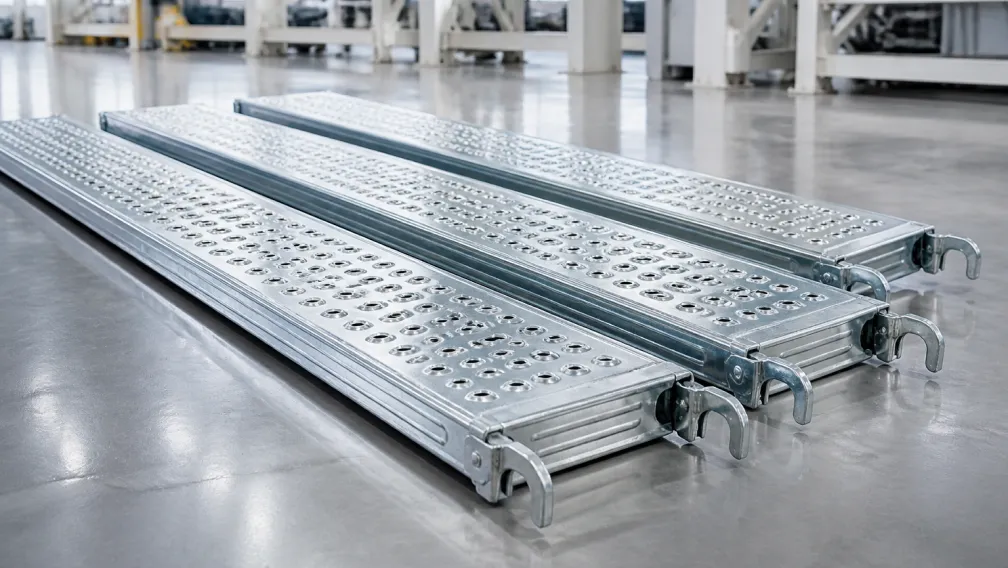
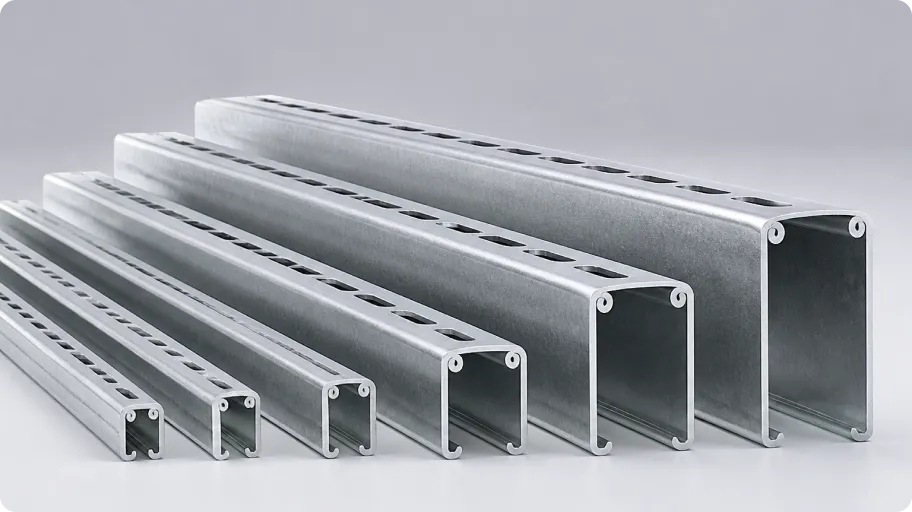
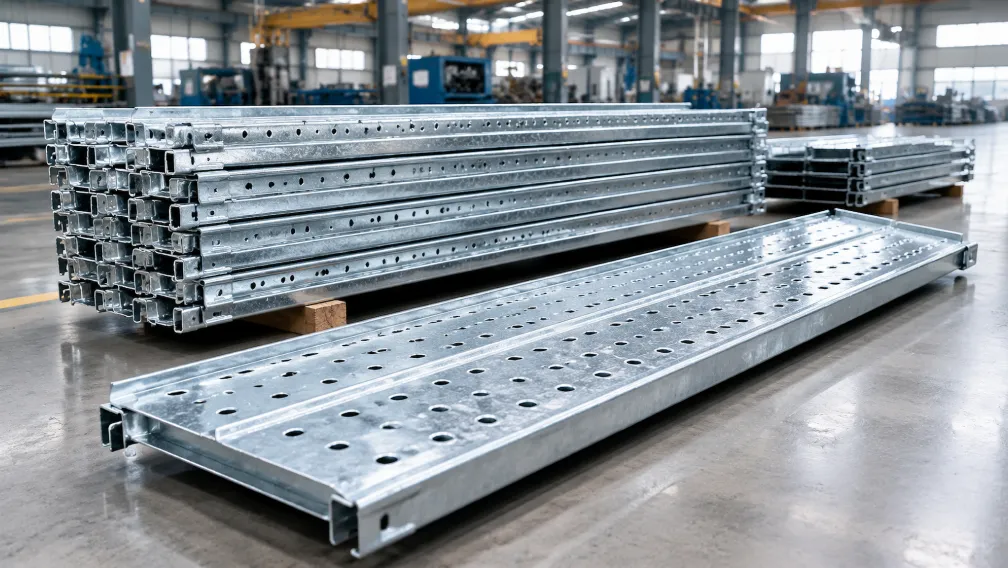
That sector mix matters because data centers, energy infrastructure, and industrial construction are exactly the project types built with cold-formed steel sections: cable tray systems for electrical distribution, strut channel and seismic supports for MEP services, purlin-framed steel buildings, guardrail for the road access around new plants, and mounting structures for renewable generation. Demand growth in the forecast maps closely onto the product families this industry manufactures.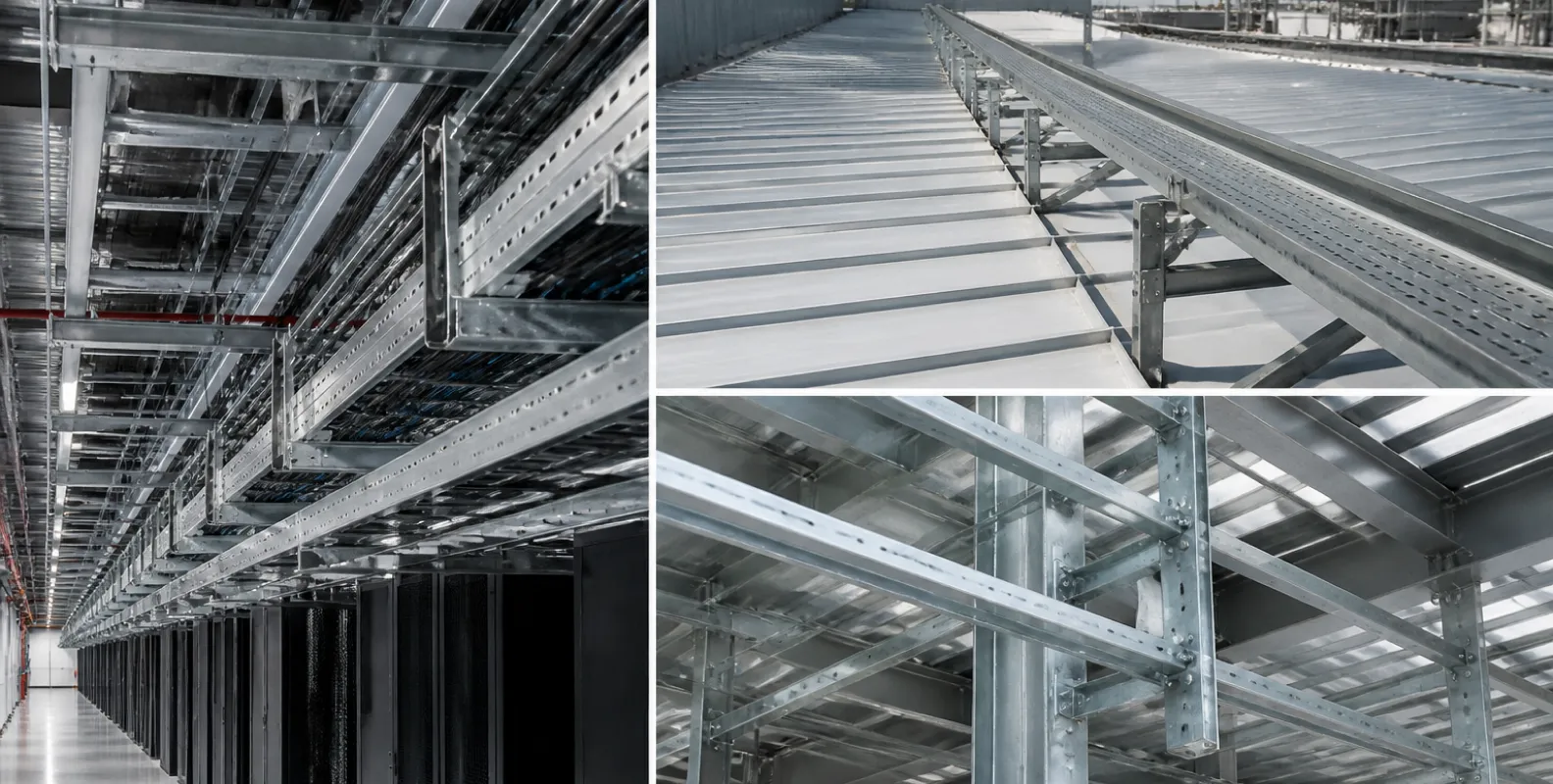
What This Means for Fabricators and Roll Forming Operations
Three practical conclusions follow from the October numbers. First, the buying window for capacity is now. Equipment ordered in late 2026 or early 2027 enters production as the ex-China market accelerates into a 4.0 percent growth year, and fabricators who wait for demand to be visible in their own order books will be queueing for machines at the same time as everyone else. Second, geography decides the product mix. A fabricator serving the Gulf should be specifying lines now for the 2027 rebound, with highway guardrail and structural section capacity for the deferred infrastructure pipeline; an Indian or Southeast Asian buyer should weight building envelope products such as CZ purlin lines toward the construction compounding at 5 to 8 percent a year; a North American fabricator's growth sits in data center and energy work, which favors cable tray and support channel capacity. Third, the China contraction keeps export pressure on coated strip and sections high, which holds input costs favorable for fabricators outside China even as finished demand accelerates: the margin structure for roll forming in 2027 looks better than the headline demand number suggests.
Raw material markets were already reflecting the regional split in the weeks around the report's release. US hot-rolled coil spot moved up to around $1,300 per short ton in mid-October on tight domestic supply, while Asian HRC offers stayed soft. Fabricators buying strip in soft markets and selling sections into growing ones are positioned in the strongest part of the 2027 cycle.
Timing the Equipment Decision
Roll forming lines carry delivery windows of 35 to 50 days for standard configurations plus installation and commissioning, so a line ordered in the first quarter of 2027 typically enters stable production in the second quarter, just as the forecast acceleration arrives. The cost of being six months early is carrying a commissioned line through a soft quarter. The cost of being six months late is quoting against competitors who already run the sections your customers are tendering. The October outlook, with the ex-China acceleration dated to 2027 and the GCC rebound conditional but forecast at 11.3 percent, argues for ordering on the early side of that trade-off, with the product mix matched to the regional table above rather than to a global average that China dominates.
Plan Your 2027 Capacity With the Demand Map in Hand
THRONCH ships roll forming lines to exactly the regions this forecast identifies as growth markets, and line configuration follows the product mix your region will actually buy. If you are planning capacity for 2027, send us your target sections and market, and our engineers will return a configuration and layout matched to your demand picture. Standard lines are completed in 35 to 50 days, with a 48-hour trial run on real strip before packing. Contact us at amy@thronch.com.
-

THRONCH
Cold Roll Forming Machine Manufacturer
THRONCH is a direct manufacturer specializing in custom cold roll forming lines and welded pipe mills. With over a decade of engineering expertise, we share technical insights and deliver high-precision